










Indigenous Rights Activist, Laura George, has criticised the composition of the Presidential Commission established to inquire into the tragic sinking of the MV Barima ferry, arguing that while it includes experts in maritime law, operations and security, the Government has failed to consult widely before establishing the Commission and did not include experts in Indigenous and human rights.
Appearing on the SOURCES talk show on Sunday, Ms George criticised what she described as the unilateral appointment of the Commission of Inquiry (COI) by President Irfaan Ali on July 30.
She said the Commission should have been established following broad-based consultations with political parties, civil society organisations, survivors and the families of those who died.
“All those political parties that are representing the people in Parliament should have been involved in identifying the commissioners for the inquiry. They should have been working together to develop those terms of reference. They should have had civil society representatives developing or drafting the terms of reference, it should have had representatives of the families, some sort of representation from the families because how are you developing terms of reference for a people that you are not working with other than to give out cash grants or road projects,” the Indigenous Rights Activist said.
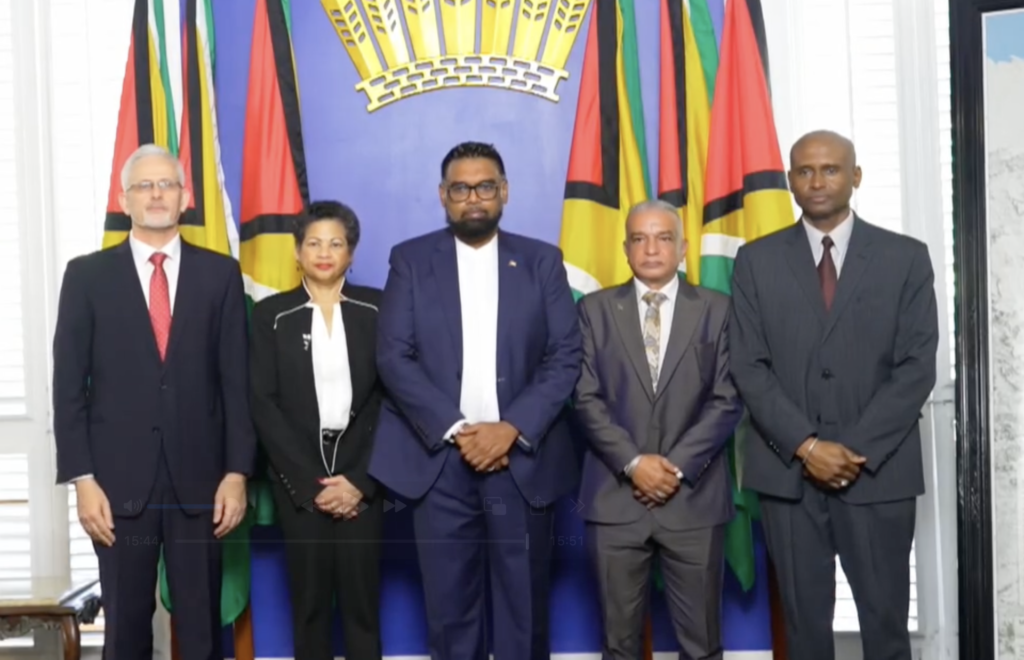
The international five-member Commission established by President Ali includes Justice Godfrey Phillip Smith of Belize, who currently serves as CARICOM High-Level Representative for Law and Criminal Justice; Captain Hamada Fouda, Senior Maritime Surveyor and Compliance Auditor; Nyree Dawn Alfonso of Trinidad and Tobago, an attorney-at-law with expertise in maritime law; Dr Andrzej Jasionowski of Poland, a Naval Architect and Marine Engineer; and Rear Admiral (Ret’d) Hayden Pritchard, an expert in maritime operations and security.
According to the Terms of Reference (TOR), the Commission is expected to determine, among other things, whether any act or omission, negligence, misconduct, dereliction of duty, systemic deficiency or institutional failure occurred.
But George said the Commission should also examine possible violations of the human rights of citizens, adding that it should have included an Indigenous rights expert and a human rights expert.
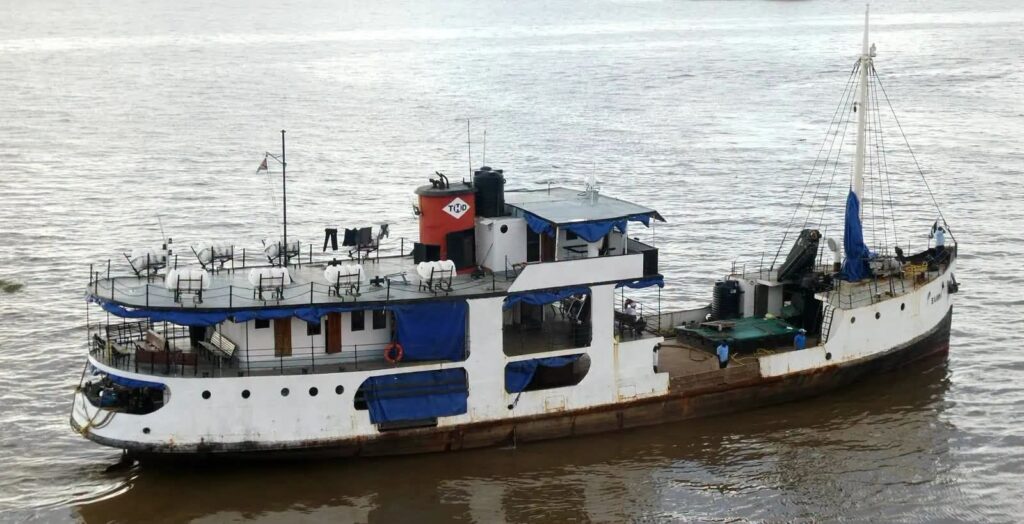
“We are not only just examining a vessel, whether it was old, how old it was or whether it was overloaded. We are examining or we should be examining a system as to why a discriminatory approach was taken to the people of the Hinterland, who are largely indigenous people but also other Guyanese. Why were these people allowed to travel for decades on a vessel that shouldn’t have been out there? Why was their safety put at risk? Why were they not considered human enough, Guyanese enough to be afforded the best of vessels that we should be giving to our citizens,” she reasoned.
Almost two months after the deadly incident, the Commission has not commenced public hearings. However, in a recent publication, it said it has been working behind the scenes.
The Commission said it has conducted a preliminary in-person survey of the site of the accident, arranged for the Arthur Chung Conference Centre to be used for public hearings, and has also established a secretariat to provide administrative, research and logistical support.
It recently published a notice, inviting members of the public, governmental and non-governmental organisations, private and public entities, and the international community to submit relevant information and recommendations.
As the Commission prepares for public hearings, George also expressed disappointment that the State has not put systems in place to provide survivors and relatives of those who died with legal counsel to facilitate their effective participation in the inquiry.
“This requires that anybody whether it is the survivors or the families of those that we have lost, they require independent legal advice and none of this has been provided to the families,” she said.
According to George, the State should be prepared to cover the cost of independent legal counsel secured by the affected families.
She also made a case for public hearings to be conducted in Region One, where the majority of the victims were from.
“The hearing should be taken probably to Region One, Port Kaituma, not to have it in Georgetown only. Take it to Port Kaituma where the people are comfortable with their surroundings, they know each other,” she said.
The public hearings are expected to begin later this month.
Persons or entities submitting information relevant to the Commission’s Terms of Reference will be required to attend and give evidence. The Commission is also statutorily empowered to summon persons to give evidence or provide books, plans and/or documents.
More than 100 people lost their lives in the tragedy. To date, the bodies of 73 people have been recovered, while more than 30 remain missing. A total of 76 people were rescued.
Related posts:
 Notice to inform public on details for MV Barima Commission of Inquiry hearings to be issued soon
 Delegation from Inter-American Commission on Human Rights to visit Guyana this week
 GDF inks Human Rights Framework agreement with US Military Southern Command
 Rights of indigenous people in Guyana being upheld -Amerindian Affairs Minister tells UN forum

You must be logged in to post a comment Login