









The Coordinator of the Maritime Administration Department (MARAD), Captain John Flores took the stand at the MV Barima Commission of Inquiry hearing this morning and informed the Commission that the MV Barima ferry had a capacity for 125 persons.
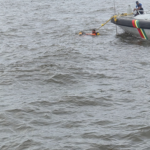
The ferry capsized and sank off the Essequibo Coast on the 18th July with more than 179 persons on board. Only 73 persons were rescued and 76 bodies were recovered. It is believed that there are more than 30 bodies that have not been recovered.
Hours after the deadly incident, the authorities had stated that the vessel was not overloaded, but that positioned came under scrutiny as survivors recounted the situation on board before the tragedy.
Captain John Flores, who also serves as the Director of the Maritime Rescue Coordination Centre (MRCC), explained to the Commission that a 2018 International Maritime Organization (IMO) State Audit of Guyana flagged the failure of the Maritime Administration Department to disclose information regarding available Search and Rescue (SAR) facilities and arrangements.
Over the past week, the Commission has heard of the various search and rescue efforts after the tragedy and the more than three hours it took for the first team to arrive at the site of the sinking.
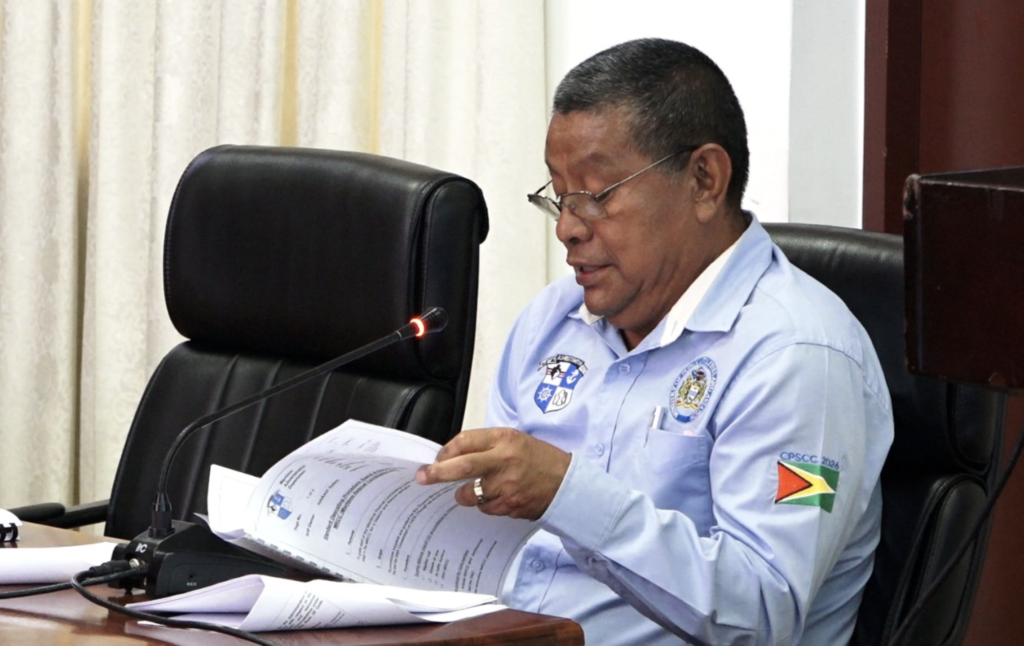
During this morning’s hearing, while being led by Counsel for the Commission, Arudhanath Gossai, Captain Flores told the Commission that following the 2018 Audit Report, a Response Plan for large cruise ships and heavily laden oil tankers was prepared, in the event of a collision at sea.
He said that plan covered aspects of the National Maritime Search and Rescue Plan, and provided for collaboration among agencies, and provisions for external support to be acquired, if necessary.
Captain Flores told the Commission that he believes the Response Plan was more than adequate to respond to any disaster involving any of the ferries in Guyana, including the MV Barima.
He said the Response Plan was used to guide MARAD in its response to the MV Barima tragedy.
It was explained that in October 2023, MARAD established an Emergency Operations Division. The Commission heard that apart from the Response Plan that was created by Captain Flores, MARAD has a Maritime Search and Rescue Plan that forms part of the National Search and Rescue Plan.
That Maritime Search and Rescue Plan was developed more than 40 years ago.
The Commission was told that the plan is complemented by a number of Standard Operating Procedures (SOPs) and Memoranda of Understanding (MoU) among agencies that are updated periodically.
Between 2023 and 2026, only a single MOU was updated. The updated MOU was signed by the Guyana Civil Aviation Authority (GCAA) and MARAD.
Related posts:
 MV Barima vessel sank “really fast”; Harbour Master was told
 Lighthouse tried repeatedly to make contact with MV Barima after distress signals -COI hears
 Three MARAD vessels responded to MV Barima tragedy from Georgetown
 MV Barima COI hears of ferry Captain being among first 50 persons rescued after sinking


You must be logged in to post a comment Login