









The Guyana Council of Organizations for Persons with Disabilities (GCOPD) has reported that while 82.9% of the polling stations used in the September 1 General and Regional Elections were located on the ground floor of buildings, the majority of available ramps were poorly designed and unsafe for use. The organisation launched its Elections Accessibility Audit and Observation Report last week.
With support from the Canada Fund for Local Initiative, the GCOPD conducted an accessibility audit and observation of approximately 470 polling stations in Regions 2, 3, 4, 5, 6, 7 and 9. The audit was intended to assess the accessibility of the polling stations for persons with disabilities, and the measures implemented to accommodate the marginalized group.
Based on the audit conducted, GCOPD found that 82.9% of polling stations were located on the ground floor, but only 4.8% of the ones that were not on the ground floor had an elevator or lift, which posed a challenge for persons with disabilities, particularly those who use wheelchairs.
GCOPD Programme Manager, Ganesh Singh, said the move to place more polling stations on the ground floor of buildings was as a result of the extensive consultations held with the Guyana Elections Commission (GECOM) in the lead up to the elections.
“Based on the data here, we can see that even though we had about 2,700 polling stations or thereabout, and we only audited 473, we can already see that most of the polling stations were on the ground floor and about 17% were on the upper floors. Out of that, only a few had elevators,” he said.
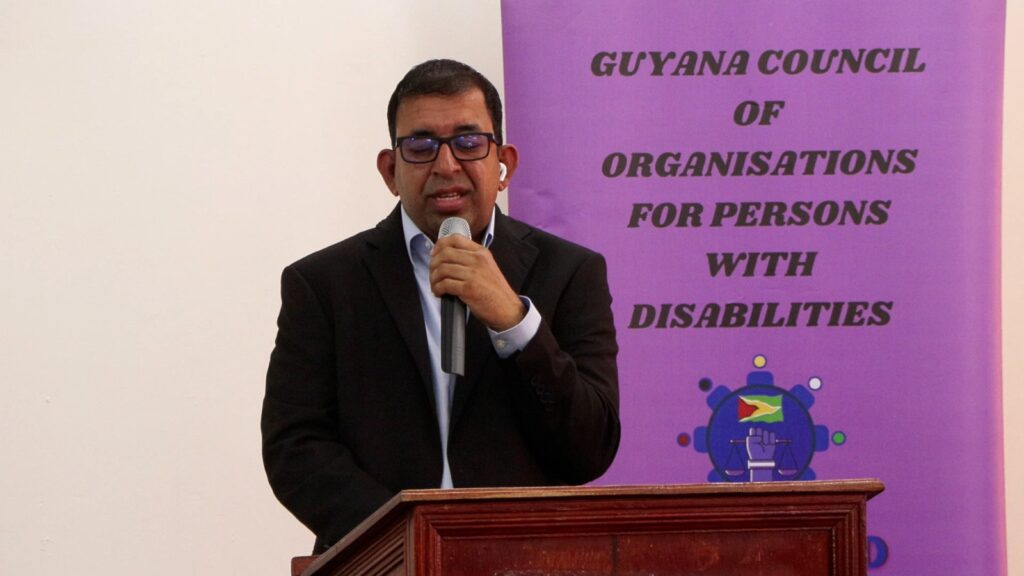
Singh, however, expressed the hope that at the next elections, there would be more public buildings with elevators and lifts to increase accessibility for persons with disability.
The Council also found that 72.7% of available ramps were poorly designed and unsafe for wheel chair users.
“So what we found that while there might be ramps at quite a few of the locations that had the polling stations on the ground floor, the ramps were not built to specifications. They were either too narrow, too steep or they were located where a wheelchair can’t even access them. And this is a common trend across Guyana because if you look at a number of place that have ramps, quite a number of those ramps are not built to specification,” Singh explained.
The GCOPD Programme Manager said just last December the National Commission on Disability launched an accessibility handbook that provided guidance to contractors and architects on how to construct accessible facilities including the specification for ramps.
Additionally, the Council found that 23.9% of polling stations had accessible washrooms, while 37.2% had sufficient seating for persons with disability. It was also found that only 68.9% of the polling stations had adequate lighting.
Among the recommendations submitted by the Council is the need for polling stations to be located on ground floor with either step free access or appropriate ramps. It said if not on the ground floor, polling stations should be accessible via elevators and or lifts.
High Commissioner of Canada to Guyana and Suriname, Sebastien Sigouin, said Canada was pleased to once again partner with the GCOPD through the Canada Fund for Local Initiative.
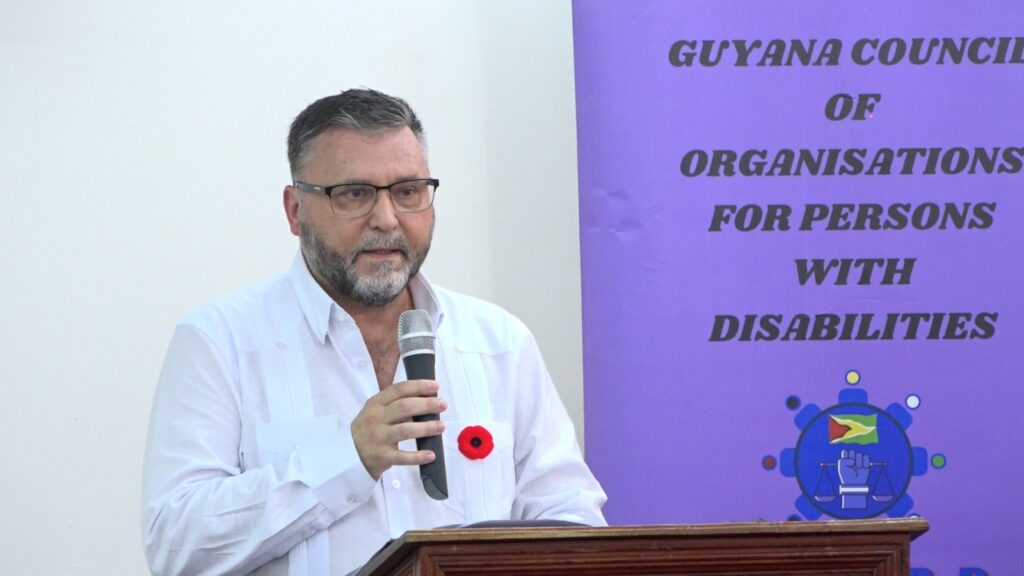
“Canada has been a long standing partner in democratic journey. And we do this because we strongly believe that every citizen deserves to be treated equally, and we also believe that everyone should have a say in who will represent them whether it is at the Parliament, in the city, they have a right to be represented, they have a right to decide who is going to make important decisions for them,” High Commissioner Sigouin said.
He said it is important to bring attention to the challenges confronting persons with disabilities, and reduce the barriers that limit their ability to exercise their right to vote.
The Canadian High Commissioner reminded that accessibility is not privilege but rather a right. (Svetlana Marshall)
Related posts:
 US Ambassador says Guyana proving to be matured democracy with peaceful and calm elections
 GECOM offers apology for difficulty faced by disabled persons at polling stations
 Building Accessibility Handbook launched to push construction industry to cater for persons with disabilities
 Study finds Persons with Disabilities were severely hampered from participating in Local Government Elections

You must be logged in to post a comment Login