









A draft final report on the deadly helicopter crash that claimed the lives of five Guyana Defence Force servicemen back in December 2023, found that while the helicopter was in “excellent working condition” at the time of the accident, there was a lack of specialized training of the pilots to handle operating the specific aircraft in certain weather conditions.
The draft report was compiled by the Aircraft Accident Investigation Department of the Guyana Civil Aviation Authority (GCAA).
According to a leaked copy of the report seen by News Source, the Bell 412 helicopter had no known defects at the time of the crash.
“The helicopter was in excellent working condition prior to and during the accident flight. The helicopter had no known defect (except for the weather radar), and the engines, rotors, electrics and avionics were operating optimally up to the time of the accident,” a section of the report read.
According to the report, while the pilots were trained and had valid pilot and medical licenses, neither of them possessed a valid instrument rating for the Bell 412 helicopter or any other type of helicopter or aircraft and may not have been adequately prepared for an Inadvertent Instrument Meteorological Conditions (IIMC). In aviation, this refers to an unintentional encounter of pilots flying under Visual Flight Rules (VFR) with poor weather conditions such as clouds, fog or darkness.
“At the time of the accident, the helicopter was flown into clouds (IIMC) in a mountainous and heavily forested area. The crews’ instrument flying skills were limited due to their lack of instrument rating training on the helicopter type. The “cockpit gradient” was very steep by both experience and military rank and CRM and cockpit management was unacceptable,” the report concluded.
The investigators found that prior to and up to the time of the report, the GCAA had no flight operations inspector current on the Bell 412 helicopter to adequately carry out regulatory surveillance and oversight activities.
The report states that the CVR files were decompressed, and the crew channels contained no audio. According to the report, the cockpit area microphone (CAM) channel contained two hours of audio data, however, signal-to-noise ratio was very poor, and it primarily captured the noise of the helicopter with most of the voices of the crew obscured by the helicopter engine and rotor noises.
“Advanced spectral de-noising techniques were used by the NTSB on the recording to attempt to improve the intelligibility of the voices in the signal, but the background noises of the helicopter still masked the voice audio,” the report states.
Investigators also found that for most of the flight, the helicopter was hand flown before it was changed to autopilot.
“It appeared that the helicopter was flying in SCAS mode for most of the accident flight, meaning that the pilots were hand-flying the helicopter. Then at 15:14:20, the helicopter was coupled to the autopilots, and the helicopter was flown in attitude retention (ATT) mode, with the altitude hold (ALT) upper mode active. (xiii) Pitch excursions were observed (increased and decreased oscillations) with vertical speed (VS) changes around 15:15:00, about 40 seconds after ATT and ALT modes were engaged. However, it could not be established whether this was because of altitude selection changes by the pilots or from another input. At 15:17:20 the left (L) and right (R) master caution lights were active which coincides with autopilots 1 and 2 (AP1 and AP2) cautions being active at the same time – this mean that either both autopilots failed or were inadvertently switched OFF,” the report states.
It said the helicopter was then flown into inadvertent instrument meteorological conditions (IIMC) in an area of dense forest with large trees and mountains.
It is suspected that the visual impairment caused by opaque clouds may have caused the crew to suffer from spatial disorientation, loss of situational awareness resulting in loss of control of the helicopter.
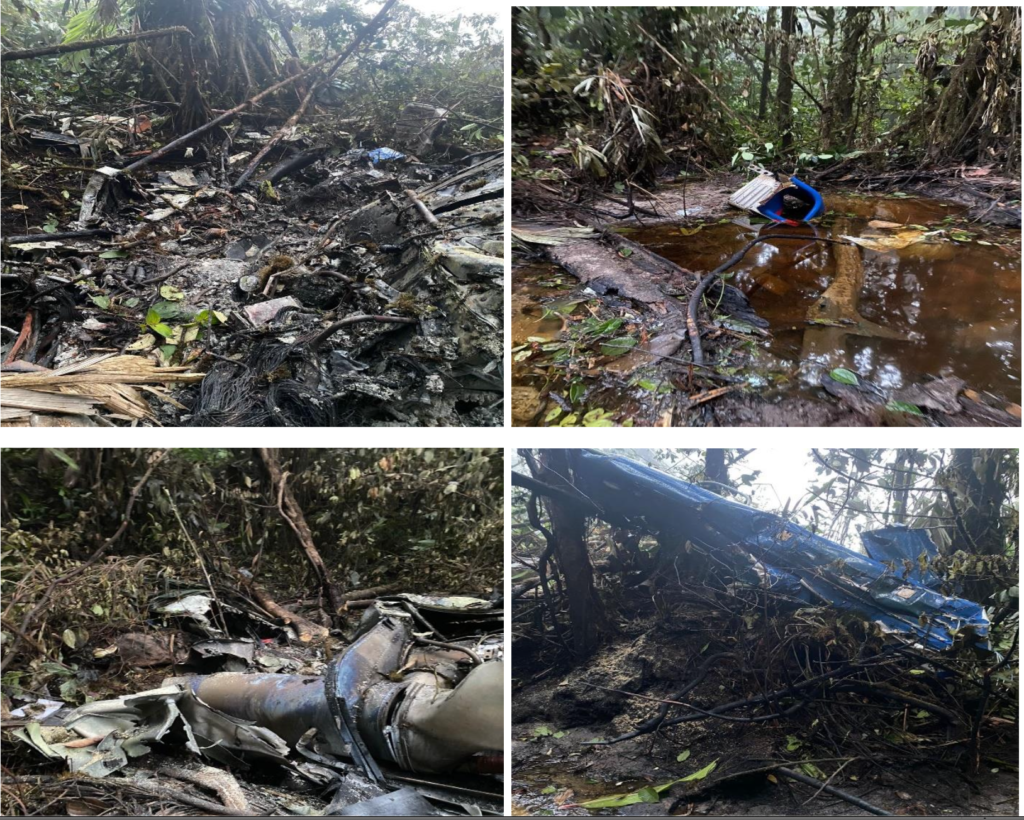
The helicopter collided with large trees on the mountainside and fell to the ground, the fuel and hydraulic tanks ruptured, and leaking fluids caught fire due to spontaneous combustion, causing the helicopter to “burn down”.
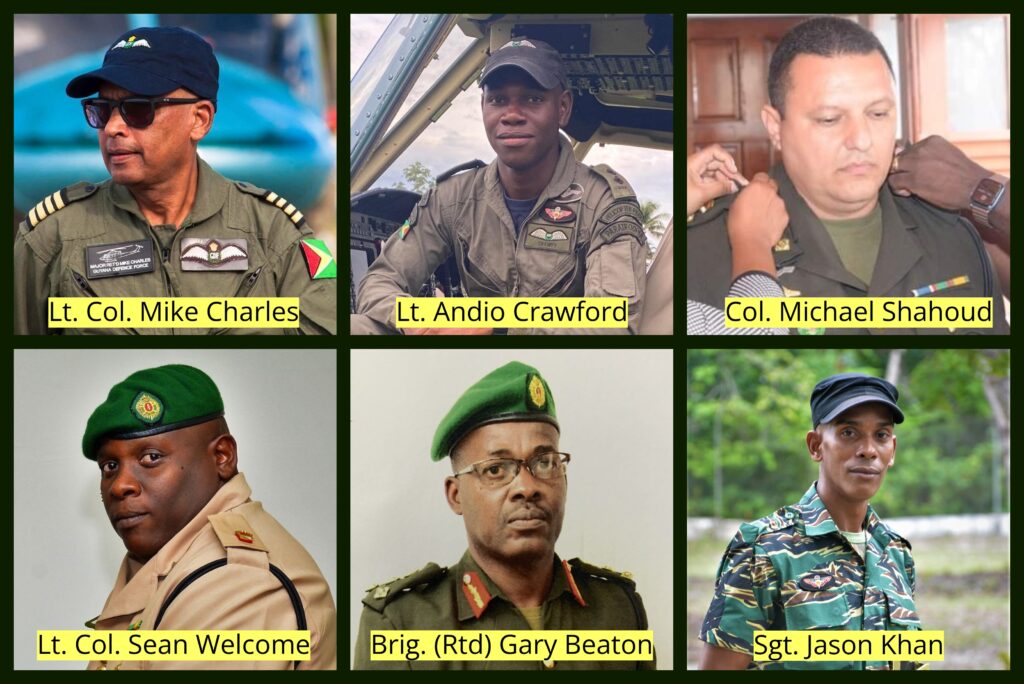
Commander of the 1st Infantry Battalion, Col. Michael Shahoud; Veteran Pilot, Lt. Col. Michael Charles, who was in command of the helicopter; Lt. Col. Sean Welcome; retired Brigadier Gary Beaton along with Sgt. Jason Khan lost their lives.
Two servicemen survived the deadly crash.



You must be logged in to post a comment Login