









The spike in oil prices on the global market linked to the ongoing war in Iran could potentially fast track cost recovery under the Stabroek Block Production Sharing Agreement (PSA), according to ExxonMobil Guyana President, Alistair Routledge.
Benchmark Brent oil prices jumped to over US$119 per barrel today following attacks by Iran on energy facilities across the Middle East in response to the US and Israeli attacks on its resources and facilities.
At a press conference today at Exxon’s Ogle Head Office, Mr. Routledge said at the current rate, ExxonMobil and its co-venturers in the Stabroek Block could potentially recover all of the historic capital and operational costs in 2026 as against 2027 as previously projected.
“The contract allows up to 75% of the gross revenues to be used to recover cost – that includes the costs we have accumulated historically. Now, while we have been generally running down that historical bank of costs at a reasonably steady and predictable pace, we were anticipating that sometime next year in 2027, we were going to get to the point where we had recovered those historic costs, largely because of increasing volumes of production that were generating higher and higher revenues to offset the ongoing expenditures plus recover historic costs. What we are now seeing in this price environment is that will accelerate. Now, we don’t forecast oil prices but if you stay at the current oil price then it would happen this year,” Routledge explained.
To date, ExxonMobil and its partners have invested more than US$40 billion in the Stabroek Block operations. It is estimated that they have recovered more than US$35 billion to date in cost oil. Routledge told reporters that approximately US$5 billion is left to be recovered based on historic costs accumulated in both capital and operational expenses.
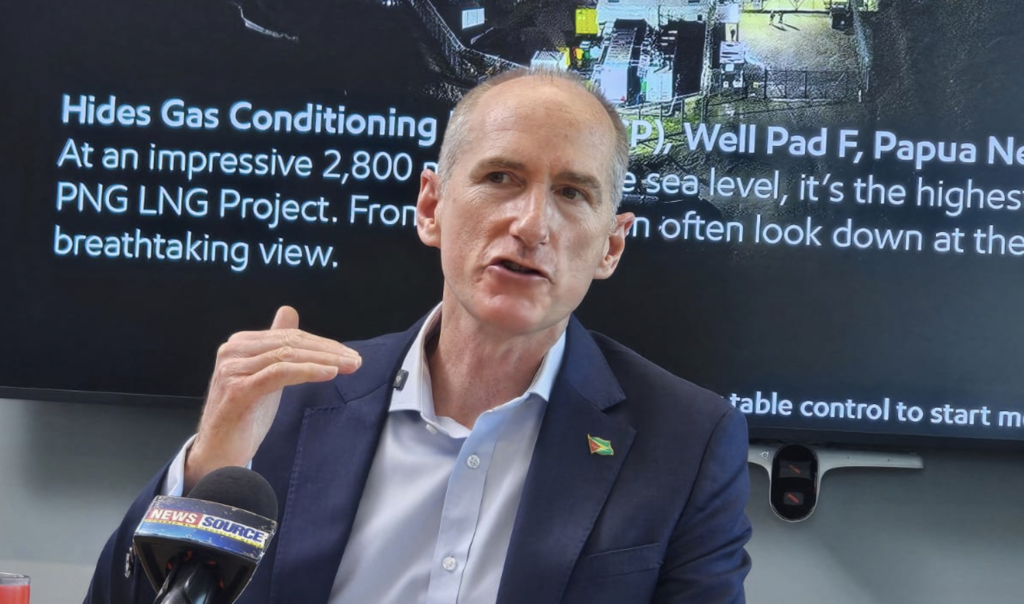
He said while the jump in oil prices would undoubtedly affect domestic consumers due to the disruption in the supply of fuel, the price increase augurs well for Guyana as a net producer of oil.
“What that then means is that instead of the roughly 14 and a half percent that the government and the country has been receiving by way of revenues into the Natural Resource Fund from the Stabroek production and revenues, what will happen is that that percentage will significantly increase. What exactly that percentage is depends on oil price, depends on volumes, depends on how much money is being spent in the month or two months leading into any given month. So it’s going to be, we will move into a much more dynamic world from the point of view of the amount of revenue the country is receiving,” the ExxonMobil Guyana President explained.
At the end of January 2026, Guyana produced 916,000 barrels of oil per day in the Stabroek Block. Routledge said ExxonMobil is encouraged by the developments in the Stabroek Block, and will continue to invest in its development. The US oil giant and its Stabroek Block co-venturers’ collective commitment to date stands at approximately US$60 billion.
“The contract is going to deliver what it was intended to do – is to encourage as much investments as possible in the Stabroek Block, which is what we have been doing. We have committed over US$60 billion to invest in Guyana. But it is also set up so that as that is recovered then the country sees significant increase in revenues without having taken any investment risks up front,” he said.
Under the Stabroek Block PSA, oil revenues are split 50/50 between the country and the Stabroek Block operators following cost recovery of up to 75%. The country also receives 2% royalty.



You must be logged in to post a comment Login