










President of the Amerindian Peoples Association (APA), Lemmel Thomas, believes institutional discrimination and cultural exclusion in Guyana’s health policies continue to act as a barrier to health services for indigenous people.
Mr. Thomas offered the statement while delivering remarks during the 25th Session of the United Nations Permanent Forum on Indigenous Issues (UNPFII) in New York.
“Our elders must trek through mountains, valleys, and rivers to access critical health services. Essential treatment like anti-venom is unavailable to men who must leave their homes to provide for their families. Poor birthing conditions persist as women at times must cross borders to access healthcare. Young people’s mental health is neglected as suicide reports become more prevalent. These conditions are more evident with the encroachment of mining into our territories – an encroachment that is paralleled by alarming increases in the rate of infectious diseases like malaria, and dengue, along with the effects of mercury,” Thomas said.
His address on Wednesday came one day after the Minister of Amerindian Affairs, Sarah Browne-Shadeek, told the Forum that Indigenous people in Guyana are increasingly gaining access to the country’s health services.
While acknowledging the investments made in the country’s health sector resulting in the construction of more hospitals, Thomas insisted inequalities still exist in the system.
“Accessing essential equipment, medicine, care, infrastructure, and even our languages remain a difficult task. Our language, culture and health are inseparable components for our collective and sustained wellbeing. Oftentimes, our people are forced to suffer delays in critical treatment because the health provider and patient cannot understand each other. This is a grave example of traditional culture being dismissed, as pollution from mining and logging destroy our natural medicines,” Thomas reported.
He said indigenous peoples need more open, consultative, and respectful avenues for dialogue between the leadership, councils and government to shape the solutions necessary to improve their health conditions.
According to him, pollution, the extractive sector, cultural exclusion and the politicisation of community issues have left indigenous peoples too divided to craft responsive health programmes.
The APA President used the Forum to challenge the Government to recognize the village councils in shaping health policies through consistent consultations.
At the same UN forum, Guyana’s Amerindian Affairs Minister painted a completely different picture of access to healthcare services as an indigenous person.
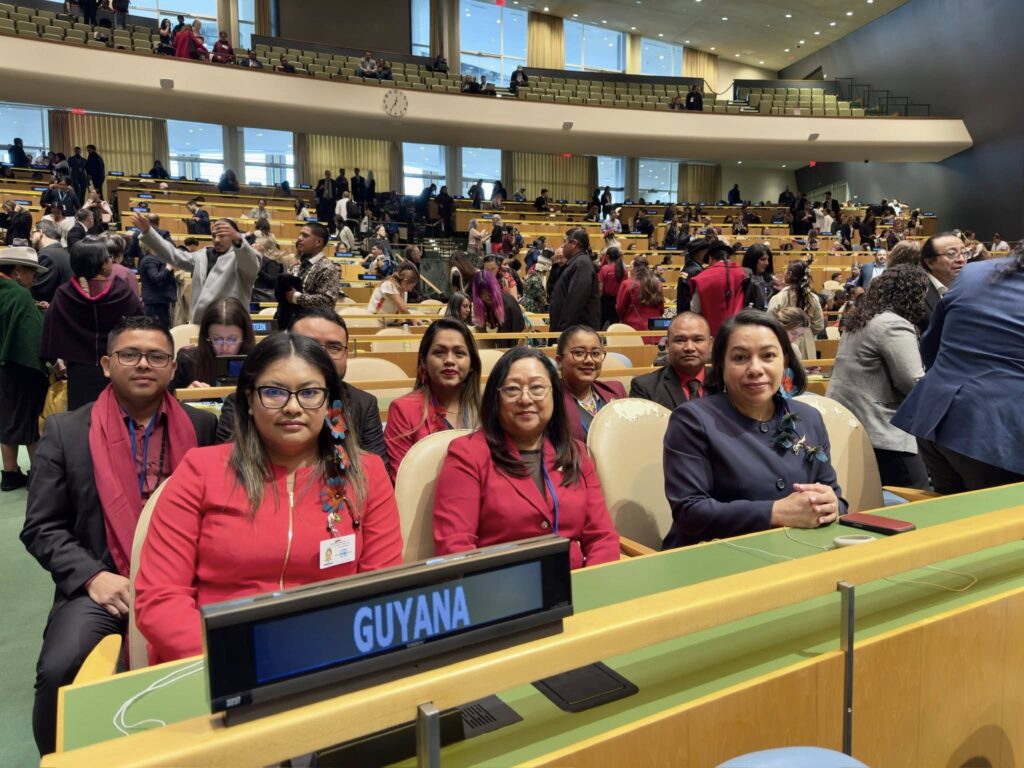
Minister Sarah Browne-Shadeek told the Forum that access to healthcare services is improving.
“Guyana provides universal access to free healthcare for everyone in the country, including our Indigenous peoples, and migrants, many of whom are Indigenous. While recognizing the use of traditional medicine, our objective is clear: every family, including every Amerindian family, regardless of geographic location, must have equal access to safe, reliable, and high-quality healthcare services,” the Amerindian Affairs Minister said.
She said through investments, the Government has been strengthening physical health infrastructure in Indigenous communities.
“We have made transformative investments in health infrastructure. New hospitals have been constructed, while other health facilities have been upgraded. These are equipped with operating theatres, radiology and laboratory capabilities, significantly expanding access to diagnostic and emergency care in remote communities,” Minister Browne-Shadeek reported.
She added that with the use of technology, the Guyana Government has been improving access to critical health services in Indigenous communities, pointing out that more than 180 ICT hubs have been established, in addition to 131 telemedicine sites that provide remote consultations and specialist support.
Minister Browne-Shadeek said this means that Indigenous people can now have access to advanced medical care from their villages.
She acknowledged that while challenges persist, Guyana’s efforts have shown improved health outcomes, including reductions in infant and maternal mortality rates and increased longevity.
The 25th Session of the United Nations Permanent Forum on Indigenous Issues, which commenced on April 20, will conclude on May 1.
Related posts:
 Amerindian Peoples Association tells UN Forum rights of Indigenous people of Guyana not respected by Government
 Rights of indigenous people in Guyana being upheld -Amerindian Affairs Minister tells UN forum
 Former Amerindian Affairs Minister rubbishes recommendation for Indigenous Affairs Authority to support Ministry and NTC
 Health Minister wants accelerated access to HIV prevention and care services in prisons

You must be logged in to post a comment Login