









Attorney General Anil Nandlall said the ruling by the International Court of Justice (ICJ) on the validity of the 1899 Arbitral Award will be “legally binding on both parties”, as he pushed back against the position taken by Venezuela that it still does not recognize the jurisdiction of the Court.
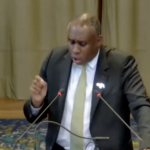
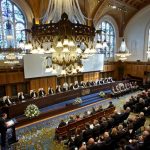
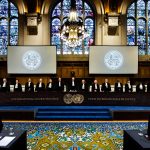
Addressing the press at The Hague on Monday following the conclusion of oral arguments on the merits of the 1899 Arbitral Award Case brought against Venezuela by Guyana, the Attorney General said now that all of the submissions have been made, the ICJ will deliberate on the issue.
He said the ICJ is expected to deliver its final judgment in the case within the coming months. That ruling, he said, will be legally binding on both parties.
“The Court’s final Judgment will bring to an end, the controversy that arose in 1962, when Venezuela, for the first time, challenged the lawfulness of the 1899 Arbitral Award and the international boundary it established, after accepting, respecting and complying with the Award and the boundary, without protest for 63 years,” Minister Nandlall said.
In her address to the ICJ Monday, Venezuela’s Acting President, Delcy Rodriguez said Caracas will not accept the ruling of the Court on the grounds that the people of Venezuela, through the December 2023 Referendum, have already indicated how the controversy should be resolved.
However, the Attorney General warned that such a move would constitute a breach of International Law, and would be rejected by the international community.
“We have heard the statements of Venezuela’s representatives at these hearings, including today, that they do not accept the ICJ’s jurisdiction and will not abide by its rulings. This would be a breach of its most solemn obligations under the United Nations Charter, the Charter of the Organization of American States, and general international law. It will not be allowed by the international community of States to defy the most fundamental rules of international law, which demand a world order based on the rule of law,” the Attorney General said.
Guyana, he said, awaits the Court’s ruling with peace, decorum, dignity and optimism, adding that it will also continue to address Venezuela in a spirit of peace, cooperation and friendship, and as sovereign equals.
Through its submissions, Guyana made a strong case for the 1899 Arbitral Award to be affirmed as valid and legally binding.
The team of international legal luminaries and Guyanese officials, in their deliberations, reminded the Court that Venezuela’s objection to the 1899 Award came more than 60 years after it had agreed to the award, and came also as Great Britain was preparing to give Guyana independence.
“Before departing Guyana, in 1966, the British negotiated an agreement with Venezuela to assure that its challenge to the validity of the 1899 Arbitral Award would be resolved peacefully. The Geneva Agreement of 1966, to which Guyana became a party upon its independence that year, provided first for a four-year period of bilateral negotiations to resolve this dispute. These negotiations were unsuccessful,” the Attorney General explained.
He said in light of the circumstances, the Geneva Agreement provided for the UN Secretary General to use the proper means of final settlement of the controversy.
After decades, the UN Secretary-General Antonio Guterres, in January 2018, transferred the controversy to the ICJ, and in March 2018, Guyana initiated legal proceedings.
At The Hague, the seat of the Court, Guyana was represented by the Attorney General, Anil Nandlall Minister of Foreign Affairs and International Cooperation, Hugh Todd; Guyana’s Agent, Carl Greenidge; Paul Reichler (U.S.), Professor Philippe Sands (U.K) and Professor Alain Pellet (France), among other distinguished advocates.


You must be logged in to post a comment Login