









The Guyana Civil Aviation Authority’s Investigation Department has recommended that the Guyana Defence Force conducts urgent resource management and instrument rating training for all of its pilots operating the Bell 412 helicopter.
The advice was among a menu of recommendations made by GCAA Aircraft Accident Investigation Department in its “draft final report” on the deadly December 2023 crash that claimed the lives of five GDF servicemen, who at the time, were part of a crew conducting a military resupply mission from Base Camp Ayanganna to Arau Aerodrome near the border with Venezuela.
The recommendation is based on the Investigation Department’s finding that there was a lack of specialized training of the pilots to handle the specific aircraft in certain weather conditions.
In the leaked document, it was explained that while the pilots were trained and had valid pilot and medical licenses, neither of them possessed a valid instrument rating for the Bell 412 helicopter or any other type of helicopter or aircraft, and may not have been adequately prepared for an Inadvertent Instrument Meteorological Conditions (IIMC).
In aviation, this refers to an unintentional encounter of pilots flying under Visual Flight Rules (VFR) with poor weather conditions such as clouds, fogs or darkness.
“At the time of the accident, the helicopter was flown into clouds (IIMC) in a mountainous and heavily forested area. The crews’ instrument flying skills were limited due to their lack of instrument rating training on the helicopter type. The “cockpit gradient” was very steep by both experience and military rank and CRM and cockpit management was unacceptable,” the report concluded.
In its recommendations, the Investigation Department said pilots must be able to adequately assess cloud formations to avoid flying inadvertently into instrument meteorological conditions.
“Pilots must avoid flying into instrument meteorological conditions if they do not possess adequate and current instrument rating training for the aircraft type, they are flying,” the Investigation Department added.
Additionally, it said the Guyana Defence Force should ensure that cockpit gradient, which refers to the established authority within the aircraft, does not affect the cockpit management at any time and more so during emergencies.
It said this can be done with adequate Crew Resource Management training and crew briefing before every flight regarding adverse weather conditions and emergencies.
“The GDF should ensure that their aircraft CVRs and FDRs are serviceable, connected and “ON” for each flight,” the Department recommended.
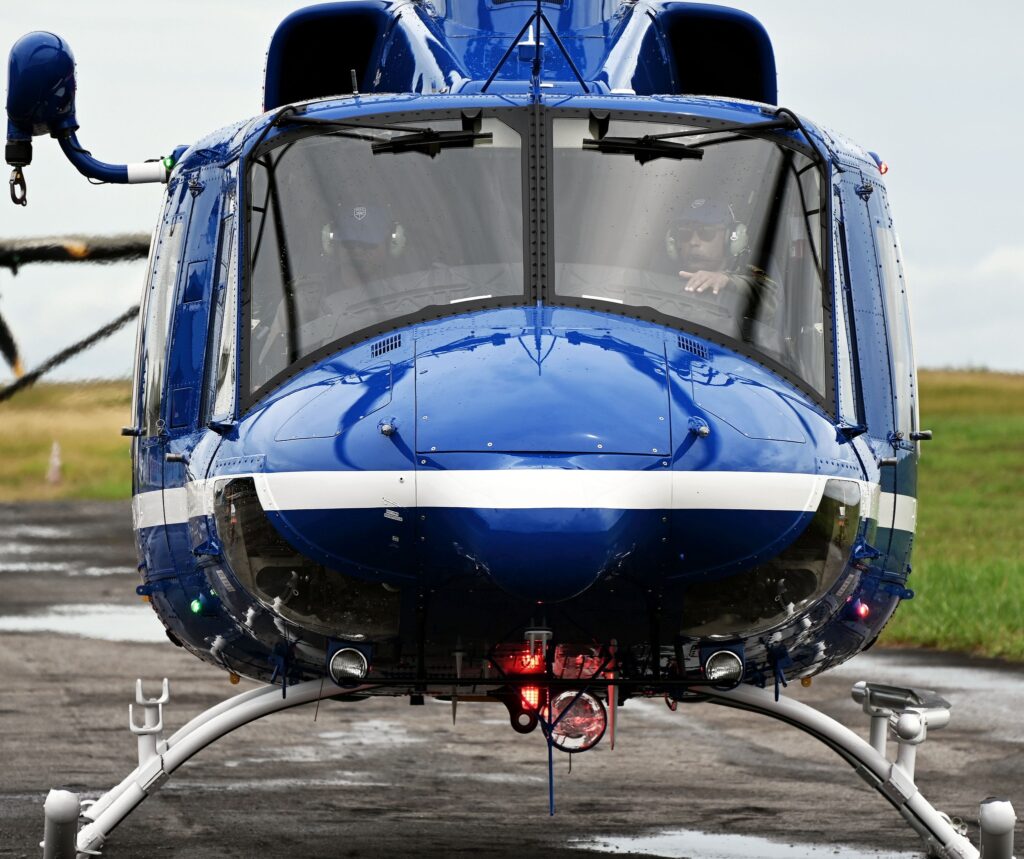
It also called on the GCAA to ensure that its flight operations inspectors are well trained to assess the Bell 412 helicopter to enable them to properly conduct surveillance and other safety oversight activities, including inspections and pilot monitors.
The investigators found that prior to, and up to the time of the report, the GCAA had no flight operations inspector current on the Bell 412 helicopter to adequately carry out regulatory surveillance and oversight activities.
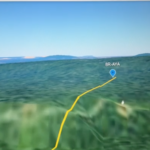
It is suspected that the visual impairment caused by opaque clouds may have caused the crew to suffer from spatial disorientation, loss of situational awareness resulting in loss of control of the helicopter.
The aircraft collided with large trees on the mountainside and fell to the ground, and later exploded.
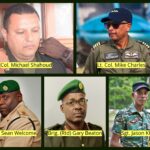
Commander of the 1st Infantry Battalion, Col. Michael Shahoud; Veteran Pilot, Lt. Col. Michael Charles, who was in command of the helicopter; Lt. Col. Sean Welcome; retired Brigadier Gary Beaton along with Sgt Jason Khan lost their lives.
Two servicemen survived the deadly crash. One of them recalled pulling the other officer who survived and Sgt. Jason Khan, who died while they were awaiting the arrival of help.
That arrival of help came more than 12 hours after the accident.


You must be logged in to post a comment Login