









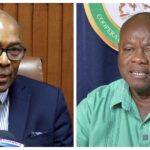
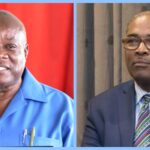
Leader of the People’s National Congress Reform and APNU Presidential Candidate, Aubrey Norton and Alliance for Change Leader, Nigel Hughes, have agreed that the last Coalition agreement along with the issues that the Coalition faced during the last government might contributed to the two parties being unable to strike another coalition deal since negotiations started in January.
During a panel discussion on the Caribbean Tea podcast on Sunday, Mr. Norton said from the onset, he had told Mr. Hughes that persons who were involved in the last Coalition government and agreement should not form part of the new negotiation team because of issues of mistrust and other problems which were raised internally. He said for that reason, his party ensured that those who were part of its negotiating team were new people.
“I believe that the history of anything impacts the present and the future and therefore if we were to have a solution, we had to move away from those who were affected by the past. In fact, when I choose a delegation to meet with them (the AFC), none from the delegation were involved in the process before, so that they will have their own new insights etc,” Mr. Norton stated.
Mr. Norton said there were both ‘friction and dissatisfaction’ in the last coalition.
Similar views were also echoed by Mr. Hughes, while admitting that some of the issues might have also arisen because of an AFC Parliamentarian voting against his own Government in the no-confidence motion.
“The experiences of both the negotiations leading up the Cummingsburg Accord and during coalition and I will certainly be the first to say that it was a member of the Alliance For Change that brought the government to its feet, but by that time, there were several difficulties, so I think everybody is instructed by their experiences,” Mr. Hughes noted.
On whether the AFC is still willing to be in a Coalition, Mr. Hughes said that the party has made many compromises, but still remains open to the possibility. However, he admitted that the AFC does not have the same electoral strength as it did in 2015.
“We are not in the same position as we were in 2015 and there are many reasons for that including the fact that there was a coalition, perhaps that did not work out the way the parties intended but we are always dispose to making compromises in the best interest of the country, it is the question of perspective I suppose,” Hughes stated.
Also contributing to the conversation was Co-Leader of the Working People’s Alliance, Dr. David Hinds, who said he believes the negotiations might have been approached incorrectly by both sides.
He argued that the APNU has been negotiating on its strength, while the AFC might have been negotiating based on its experiences. According to Hinds, those negotiating positions were bound to create problems.




You must be logged in to post a comment Login