









Defense Attorney Siand Dhurjon today grilled the Permanent Secretary of the Ministry of Foreign Affairs, Sharon Roopchand on the established protocols in place for the receipt of Extradition Requests, and Government’s attempt to link the Mohameds to Venezuela, as the Extradition Committal Proceedings against businessmen, Nazar and Azruddin Mohamed continued in the Georgetown Magistrates’ Court.
Dhurjon sought to strengthen the Defense’s position that the Mohameds are facing political persecution.
“Those arguments go to the heart and soul of our case, and we have never one day waivered in the argument and the submission that these extradition proceedings are politically motivated and they have no other proper motivation,” Dhurjon told reporters.
The Attorney suggested to the Court, as he cross-examined Roopchand, that the Ministry of Foreign Affairs went against established practice in the processing of the extradition request from the United States of America for the Mohameds to be extradited.
“The proceedings in this case were short-circuited. Documents came in the dark of night, handed directly to a Permanent Secretary, [who] drove to a minister, who issued an ATP [Authority To Proceed] and the next morning the matter was filed in the courts,” Dhurjon told the Court.
While being cross-examined, Permanent Secretary Roopchand told the Court that upon her appointment to the Ministry of Foreign Affairs as the Permanent Secretary, she was briefed on established protocols. Those protocols, according to her, were not in writing.
She told the Court that based on the established protocols, extradition requests are received by the Ministry of Foreign Affairs through the Office of the Permanent Secretary, and in her absence the Head of the Ministry’s Legal Affairs Department.
Roopchand told the Court that once she receives an extradition request, she has the authority to deliver that request to the Minister of Home Affairs. However, if the request was received by the Head of the Legal Affairs Department of the Ministry of Foreign Affairs, it is then delivered to the Treaty Department of the Ministry of Home Affairs.
In the case of the Mohameds, the extradition request from the US was received after office hours, and delivered to the Minister of Home Affairs, Oneidge Walrond on the night of October 30, 2025. According to Roopchand, the US, at the time, had advised the Foreign Affairs Ministry on the then impending request, and as such it was expected.
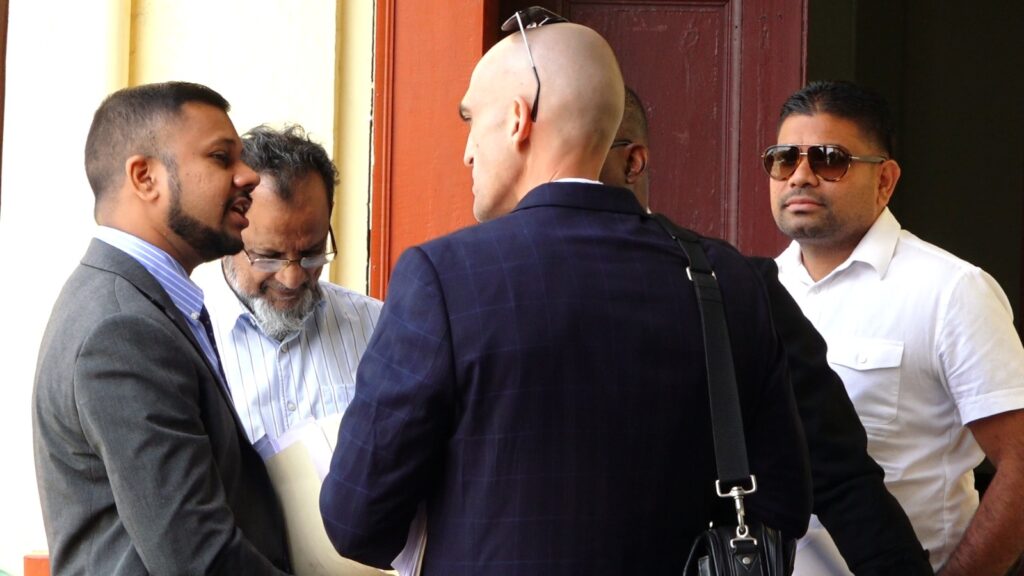
But Dhurjon submitted to Roopchand that she had “no business” taking the extradition request to the Home Affairs Minister. He suggested to Roopchand that the request ought to have been received by the Head of the Legal Affairs Department, processed and submitted to the Treaty Department of the Ministry of Home Affairs, but Roopchand rejected those assertions.
“I am the competent body who can transfer the documents,” Roopchand maintained in the Court.
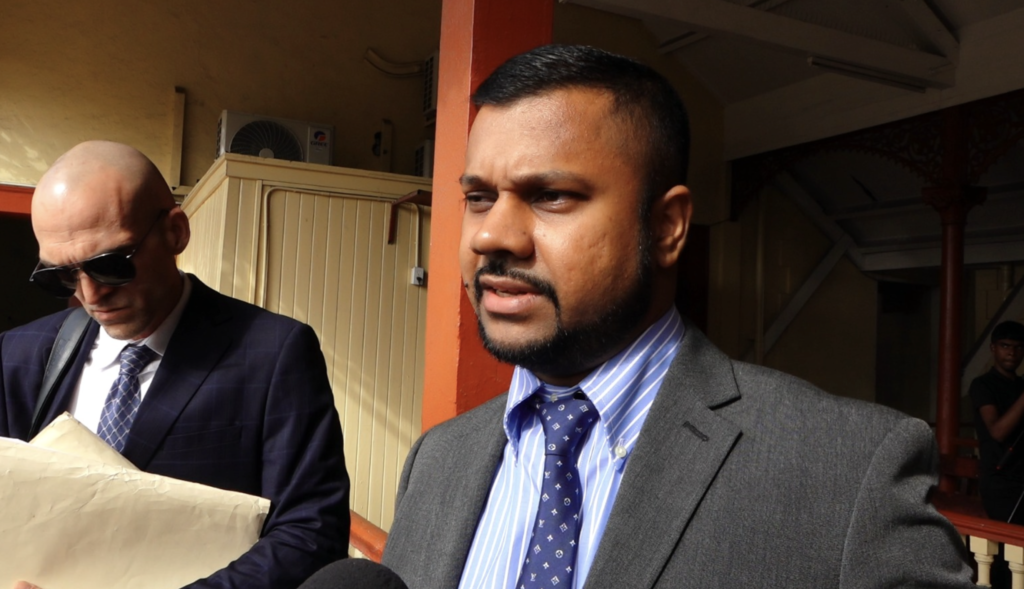
Outside the courtroom, Dhurjon told reporters that he had evidence to show that the protocols were not followed in the case of the Mohameds.
“Something as important as extradition documents ought to follow one consistent process, one protocol. These protocols ought to be set out in writing. What the witness has come today to tell us is that protocols aren’t in writing, somebody told her word of mouth, and it is carried down word of mouth, almost like an old wife’s tale and that we have evidence that in other extradition cases the chain of custody of these documents is completely different. It does not go from Embassy to PS to Minister, there is another method by which it has to be dispatched,” he told reporters.
In an attempt to show variation in the handling of Extradition Requests, the Defense Attorney, in the courtroom, pointed to the case of Ronley Floyd Bynoe, who is also facing extradition to the US for alleged acts of fraud.
Dhurjon submitted to the Court that while the Mohameds’ extradition request was processed within hours, including the approval for the Authority To Proceed, Bynoe’s Request took approximately four months to process.
The Extradition Request from the US in the case of Bynoe was received by the Foreign Affairs Ministry in early November, 2025. However, additional documents were sought from the US, and it was not until February, 2026 that the matter reached the Court.
Roopchand told the Court that she did not receive that extradition request, and it was the Head of the Legal Affairs Department that dealt with it, and transferred it to the Treaty Department of the Ministry of Home Affairs.
Roopchand was also questioned on meetings that the Minister of Foreign Affairs, Hugh Todd reportedly had with US Marshals and US Law Enforcement Officers before the extradition request for the Mohameds was submitted to the Government. She testified that she had no knowledge of such meetings.
The Defense Attorney also spent a considerable amount of time questioning PS Roopchand on statements made by the Foreign Affairs Minister linking the Mohameds to Venezuela in particular the Nicholas Maduro Regime, and the hiring of Lobbying Firms.
However, while the Permanent Secretary said she knew of the contractual agreements with the US lobbying firms, she had no knowledge of statements made by the Foreign Affairs Minister connecting the Mohameds to the Maduro Administration, although the Foreign Affairs Ministry had issued a statement on the issue in October 2025 ahead of the receipt of the extradition request.
The Defense later made an application for all documents relating to the hiring of the lobbying firms and communication with regards to the Mohameds to be disclosed in Court, but the Magistrate refused the application, indicating that disclosures have already been completed.
The case will continue on March 12, 2026 when Roopchand is expected to return to the witness box.
Related posts:
 Mohameds’ Attorney want Prosecuting Attorney barred from extradition case over “biggest criminal” outburst in Courtroom
 Government in receipt of other extradition requests -PS Roopchand tells Court
 Foreign Affairs PS grilled on receipt of extradition documents for Mohameds
 Foreign Affairs Permanent Secretary testifies of receiving extradition request for Mohameds from US Government

You must be logged in to post a comment Login