









Sections of the Ministry of Foreign Affairs’ “incoming correspondence” books were admitted into evidence as the Mohameds Extradition hearing continued today before Principal Magistrate Judy Latchman.
The two books – Office of the Permanent Secretary Incoming Correspondence, and the Ministry of Foreign Affairs’ Incoming Correspondence – came into focus as Defence Attorney, Roysdale Forde questioned whether the Permanent Secretary, Sharon Roopchand, had personally received the US Extradition documents from a courier, as she testified.
Roopchand, who has been on the stand for more than a month, submitted the books to the Court this afternoon following an application from the Defense.
Last Friday, she told the Court that on November 26, 2026 she received a package from the US with documents pertaining to the extradition request. The Permanent Secretary testified that the documents were delivered in a brown folder by a human courier from the US Embassy.
However, she was unable to describe the courier’s physical appearance.
Today, Defence Attorney Roysdale Forde questioned whether Roopchand had received the documents directly from the courier as claimed.
“We do not believe that what the witness would have been testifying that occurred on the 26th November actually occurred. We do not see anything to support the existence of the occurrence of this situation. It is hard to imagine documents so important, a permanent secretary receiving them, she doesn’t know the name, can’t tell when they were brought, who brought them, can’t provide a description of the person. It leads to the sort of conclusion, which we have arrived at, and based on our own investigation, would indicate that this is an event that never actually happened,” Forde said.
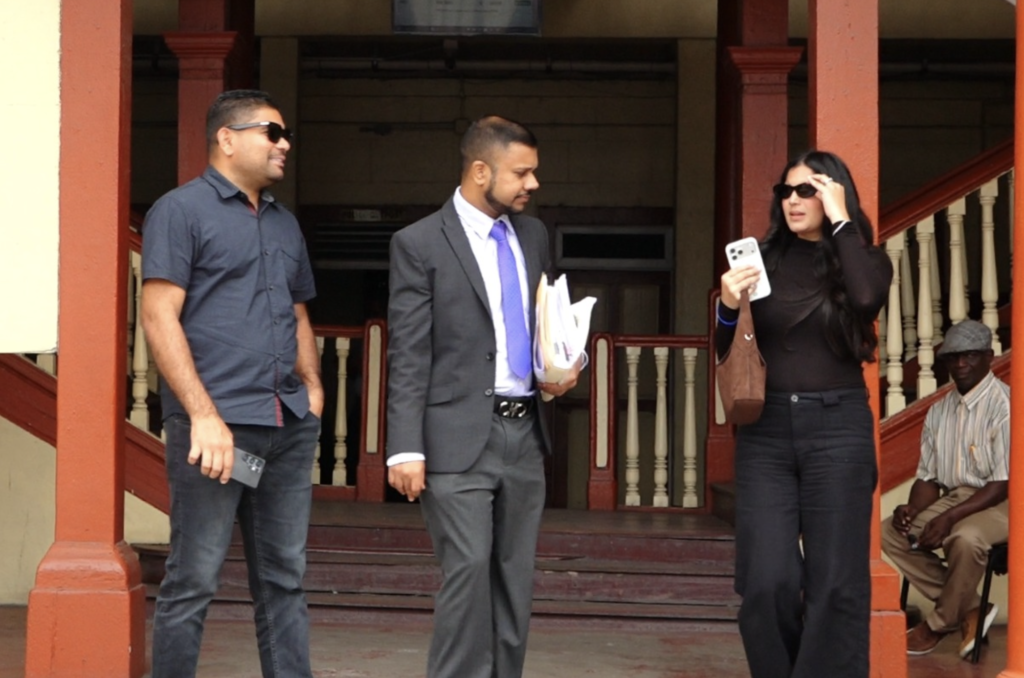
But Special Prosecutor, Glenn Hanoman questioned the Defense’s line of questioning and the relevance to the case.
He told reporters that the documents at the centre of the case have been admitted into evidence. He said there is no doubt that the documents were received.
“There was something quite shocking today, where the defense is now saying, basically they now believe that the whole receipt of these documents were some sort of fabrication, so they are now exploring whether the documents were actually received or not. And that is how they underpin that line of questioning and why it was relevant. The fact that the documents exist and are already exhibits in court, obvious it is not a fabrication,” he said.
Last week, Hanoman had expressed hope that the cross-examination of the witnesses would have concluded this week, but with the first witness still on the stand, the Special Prosecutor said he is losing hope.
“I am losing hope. All questions asked in any court have to be relevant questions whether it is from the prosecution or the defense at all stages. When the defense is cross-examining, in order to demonstrate that the questions are relevant they should really lay a foundation first or they can give an undertaking that these questions would later become relevant,” he said.
According to Hannoman, the Defense is employing a number of delaying tactics to drag the case out.
On Tuesday, PS Roopchand is expected to face questions on the sections of the books from the Ministry of Foreign Affairs that were submitted into evidence today.
Related posts:
 Foreign Affairs PS grilled on handling of extradition requests in Mohameds’ extradition hearing
 Government in receipt of other extradition requests -PS Roopchand tells Court
 Foreign Affairs PS grilled on receipt of extradition documents for Mohameds
 Foreign Affairs Permanent Secretary testifies of receiving extradition request for Mohameds from US Government

You must be logged in to post a comment Login