









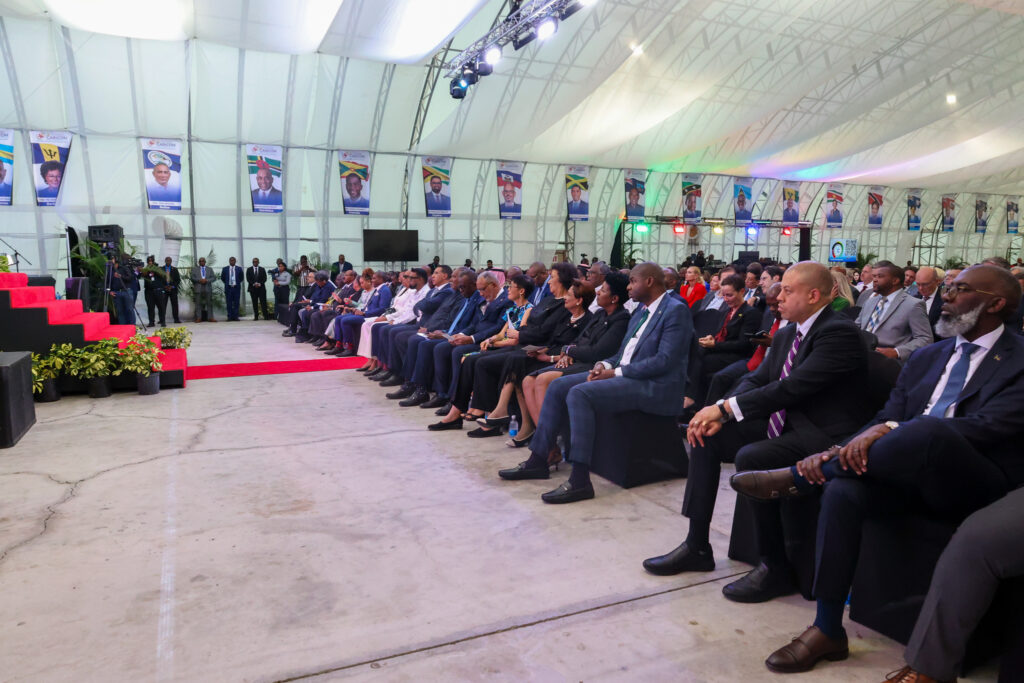
The 50th Regular Meeting of the Conference of Heads of Government of the Caribbean Community (CARICOM) opened on Tuesday in St. Kitts and Nevis with the CARICOM Secretary General, Dr Carla Barnett taking stock of the prevailing regional and global environment, the impact on the Regional Bloc and the need for the community to remain united, even as it seeks to capitalize on existing opportunities.
The Heads of Government are meeting at a time when the Region remains heavily divided along political lines over the US military’s presence in the Caribbean, the capture and ouster of Venezuelan President Nicholas Maduro, and the US fuel blockade on Cuba, which has plunged the island into a crisis.
In her address to the Heads of Government, the Secretary General said CARICOM Members States must continue to “act together”, but as a collective they must also engage extra-regionally to seek out new opportunities amid a shifting global order.
“The shifting global order presents tangible opportunities as new market emerge, [and as] strategic partnerships are recalibrated, CARICOM must engage extra regionally with intention and with coherence by articulating our shared priorities in areas such as energy transition, digital infrastructure. Building resilience for climate change and technology, we can attract investments and forge business opportunities that are aligned with our development objectives,” she told the regional leaders.
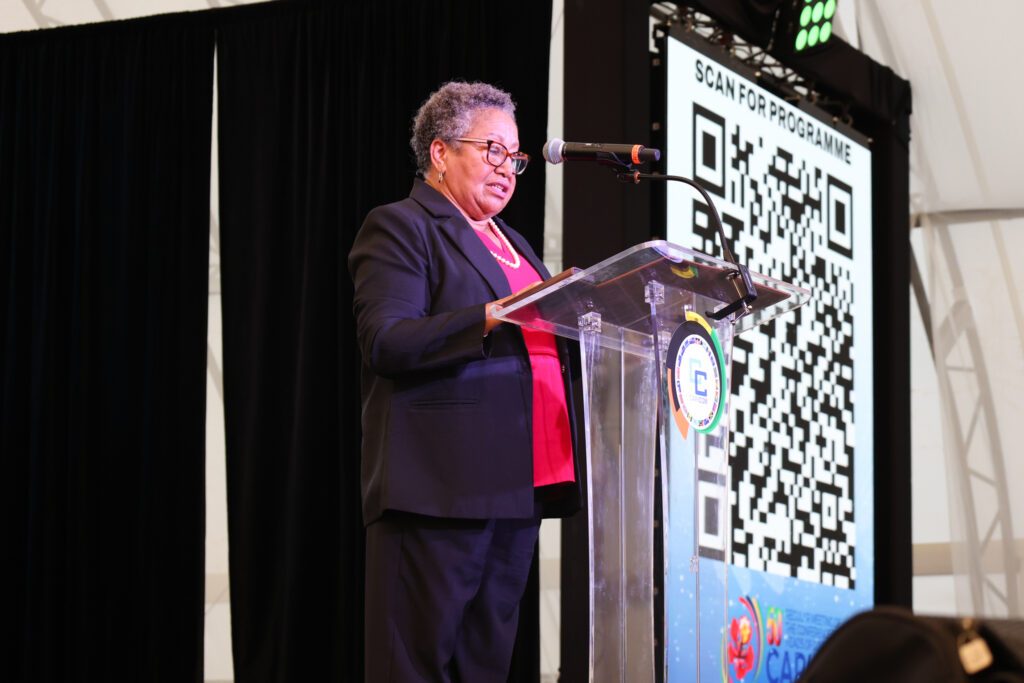
Dr Barnett reasoned that a coordinated foreign policy reduces vulnerability to the inevitable external shocks, which she emphasized, no Member State can effectively absorb alone.
She said already a high number of third states have pledged their commitment to increase their engagements with the community.
With representatives from the African Export-Import Bank (Afreximbank), Saudi Arabia and the United Arab Emirates (UAE) present, Dr Barnett said their presence demonstrates that cooperation and credibility can be transformed into new opportunities for growth, resilience and shared prosperity.
Referencing CARICOM’s partnership with Afreximbank, Dr Barnett said the Regional bloc will continue to deepen its engagement with the bank in areas as such finance development, advocacy for reparation, air connectivity and cultural exchange.
She admitted that 2025 was a difficult year for the Community.
“Without question, 2025 was one of the most challenging years in the history of our regional integration movement – extreme weather events, geopolitical tensions, challenges to multilateralism and the rules based system and economic pressures tested our region and threatened hard won development gains,” she said.
The CARICOM Secretary General said while individual national priority remains vital, the bloc’s collective strength would amplify its voice, secure opportunities for growth and mitigate risks.
This, she said, was approach adopted in the case of Haiti that helped transformed a regional concern into a global priority.
Reference was also made to the decision by Barbados, Belize, Dominica, St Vincent and the Grenadines to allow the full free movement of their citizens among the four states within the framework of the CARICOM Single Market and Economy (CSME).
This pioneering step, the CARICOM Secretary General said, paves the way for increased economic activity and people to people contacts.


You must be logged in to post a comment Login