






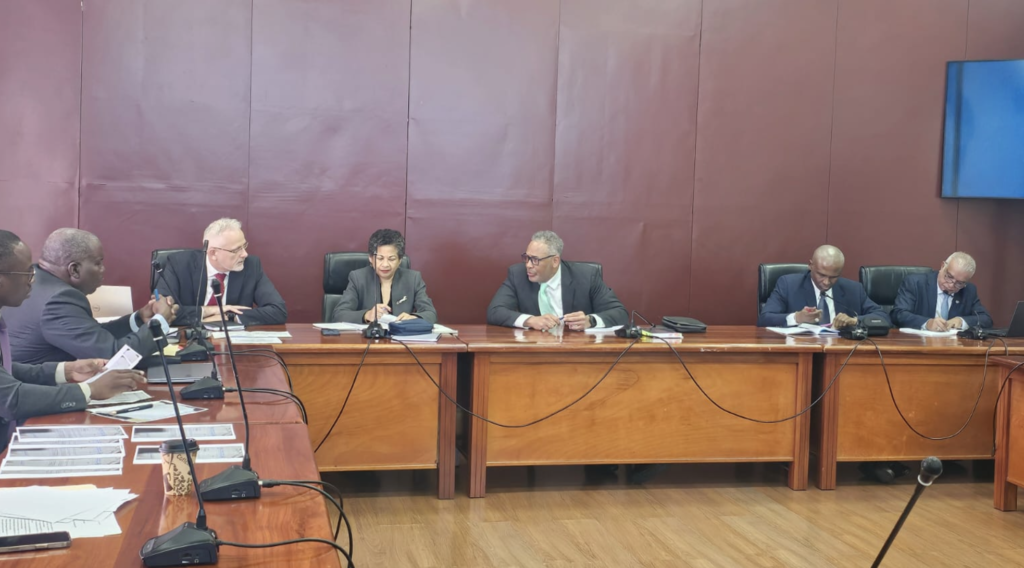
In a testimony that came down to numbers, a Transport and Harbours Department (THD) Ticketing Clerk told the MV Barima Commission of Inquiry today that she issued 116 tickets for persons to travel on the MV Barima on July 18, and she could not account for the more than 40 additional persons who were onboard the vessel when it sank.
Unrepresented by Legal Counsel, the Ticketing Clerk, Atasha Washington, appeared before the five-member Commission and testified that 125 persons were generally approved to travel on the MV Barima on any given voyage. It was explained that 85 slots are usually available for ordinary passengers traveling to Port Kaituma, 15 reserved for pensioners also traveling to Port Kaituma, and 25 slots for persons traveling to Morawhanna.
Under intense questioning from Commissioner Andrzej Jasionowski, Washington told the Commission that only 116 boarding passes were issued for the July 18 trip. It was explained that initially 118 persons were booked, however, two persons who were destined for Morawhanna cancelled their trips to the North-West District.
“My total is 116…two persons never boarded,” the Ticketing Clerk told the Commission.
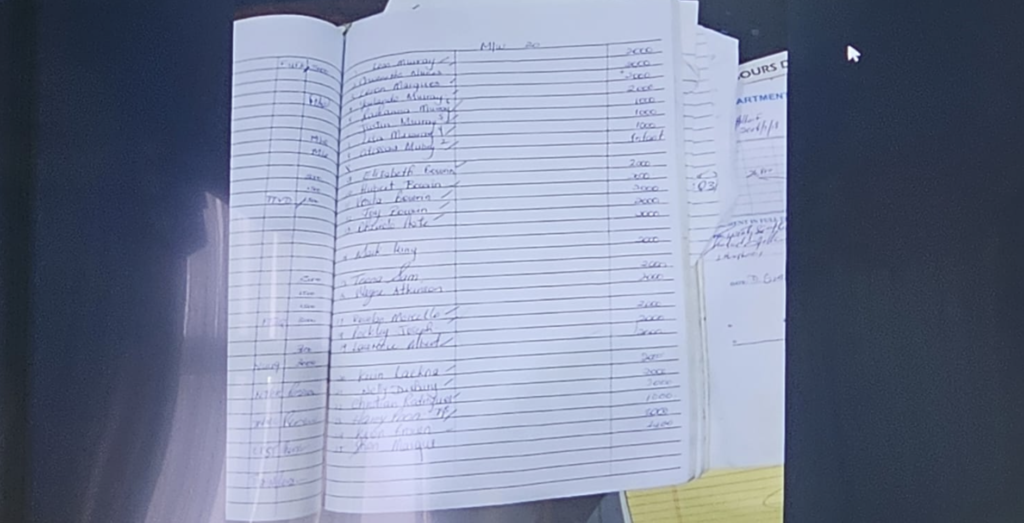
To support her testimony, Washington presented the Commission with a bundle of documents. Those documents included extracts from a T&HD log book that included the July 18 Manifest for the MV Barima, a list of 25 persons who were booked to travel to Morawhanna on the MV Barima, a list of the passengers who paid via MMG, screenshots of messages that she had sent to the Goods Wharf Superintendent Delon Grandison indicating that the tickets were sold out with the exception of seven that were reserved, and a letter which indicated that she was sent on administrative leave, following the tragedy by the T&HD General Manager Yulander Hughes.
The manifest extracted from the logbook had the names of 130 persons. However, after extensive cross-examination, and Washington’s reexamination of the documents, it was revealed that there was a repetition of names, and at least two persons had canceled after initially booking, resulting in a total of 116 passengers.
The vessel, however, had more than 179 persons onboard including 17 crew members when it capsized and sank off the Essequibo Coast on July 18 killing more than 100 persons.
Asked by Commissioner Jasionowski, how more than 40 plus persons got onto the vessel, Washington said she could not account for them since she did not issue tickets to those persons.
“I have no knowledge of that,” Washington insisted.
Earlier in her testimony, while being led by Counsel for the Commission Teni Housty, the Ticketing Clerk, who is still on administrative leave, explained that by Friday, July 17, 2026 she had printed the first set of tickets to Kessa Case, one of two persons responsible for boarding the MV Barima the following day.
She testified that by the morning of Saturday, July 18, she had already issued a total of 85 tickets and boarding passes for Port Kaituma and 25 tickets for those travelling to Morawhanna. The 15 slots reserved for pensioners had not been touched.
Washington testified that during the course of that morning, she was advised by the Goods Superintendent, Delon Grandison that she should reserve tickets for persons who were traveling with a deceased person.
“In the morning, Mr. Grandison informed me that there was a dead going on the boat, and I should reserve spaces for the family members that would be coming. A specific number was not given. So, as I proceeded, when I would have exhausted the 25 for Morawhanna, the 15 for the pensioners, I would have kept calling him, two persons are outside, can I book, okay yes. The last conversation was seven remaining,” Washington explained.
Washington said the persons for whom the tickets were reserved never came, although she saw a casket outside the ticketing booth on the wharf.
The Ticketing Clerk testified that she would later inform Grandison that with the exception of the seven reserved, she had issued the maximum number of tickets, and there was still an influx of persons outside the ticket booth.
Washington explained that there were occasions in the past when approval would be granted to sell additional tickets beyond the standard 125, and as such, advice was sought.
“I would then inform Mr. Grandison that we have excess passengers and he would then probably call his supervisors and then whatever they decide, how many they decide to send on the vessel,” Washington explained.
Washington explained that on this particular occasion, advice was sought but Grandison never got back to her with an answer, although promising to do so. She said as such no additional ticket was sold.
“I would have indicated to Mr. Grandison that I would have observed an excess number of passengers, and I was still waiting on word as to how to deal with it. That word never came,” she testified.
Grandison is among three men on remand, charged with more than 70 counts of murder in connection with the MV Barima tragedy.
The Commission also heard that payments for the voyage to Port Kaituma are made via both MMG, and in person, while tickets for Morawhanna are purchased in person by passengers on the day of the trip.
It was explained that two to three trips before the incident, passengers booking online were allowed to not only pay via MMG, but also include the names of all the passengers for which tickets were purchased. However, the system was updated to allow only the name of the purchaser, an emergency contact number and a number for additional passengers.
The names and contact numbers for passengers, who purchased tickets in person, were documented in the logbook.
According to Washington, she had brought the changes to the attention of the Goods Wharf Superintendent.
Washington told the Commission that following the incident on Sunday, July 18, she was forced to contact the emergency numbers listed to ascertain the names and number of the other passengers.
Related posts:
 Acting Marine Superintendent testifies no reason existed to ground MV Barima despite deficiencies
 Police cannot detain vehicles over unpaid traffic tickets -AG Nandlall warns
 MV Barima COI hears of ferry Captain being among first 50 persons rescued after sinking
 609 Dynamic Airways local passengers to be refunded for unused tickets -Ministry of Public Infrastructure


You must be logged in to post a comment Login