









Following concerns raised by President Irfaan Ali about the reluctance by local aviation operators to reduce the cost for hinterland travel, the local Aviation Operators’ Association today explained that they have been investing in their business.
While the Association did not explain the outcomes of the meetings, it said the local airlines have spent decades investing in aircraft, infrastructure, training, employment, and safety as well as investing in new aircraft, and that has particularly been responsible for the cost structure.
“For instance, the capital repayment for a Cessna Caravan is over US$40,000 per month or about US$700 per flight hour and these costs are regardless of whether the aircraft is parked or flying. A Technam P2012 Traveler costs approximately US$3.2 million while a Cessna Caravan costs approximately US$3.8 million, and the HAL 228 approximately US$10 million,” the Aviation Association said in its stated.
The Association said that it has noted the concerns of the President, explaining that the domestic aviation industry has always regarded itself as a partner in Guyana’s national development and remain committed to working collaboratively with the Government to ensure that the people of Guyana continue to benefit from safe, reliable, affordable, and sustainable air transportation.
“Aviation insurance premiums are generally some 300% higher in Guyana than for comparable operations in the United States and are amongst the highest in the Caribbean region. This is because insurance companies assess Guyana as a high operational risk, flying in conditions of remote aerodromes, a tropical environment, limited emergency infrastructure and landing and take off in short unpaved runways. Insurance is, of course, mandatory,” the Association went on to explain
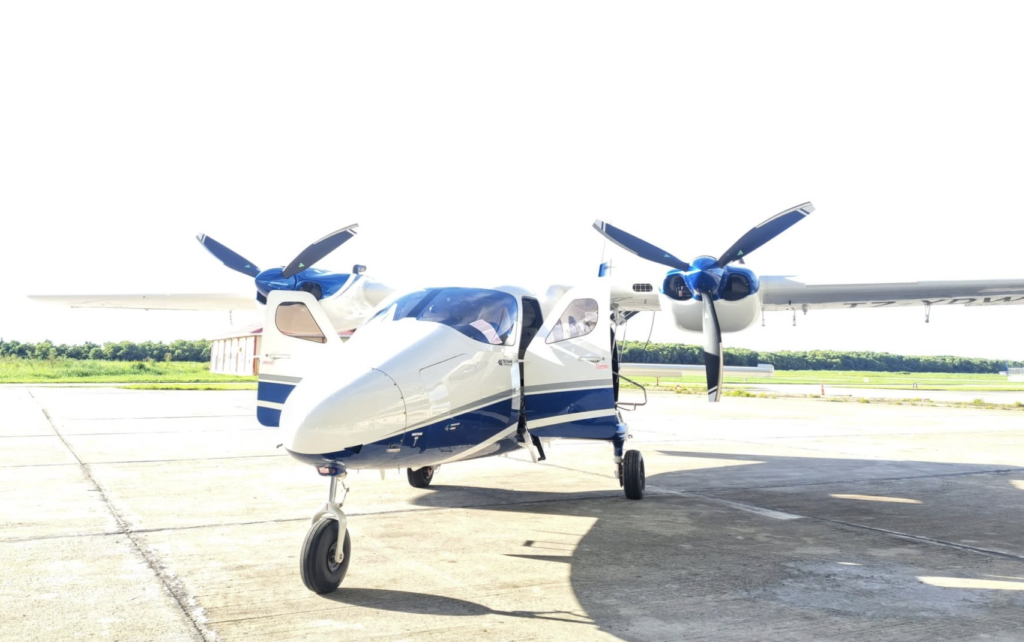
The Aviation Operators Association said it acknowledges the Government’s investment in continuously upgrading hinterland aerodromes across Guyana, which it said has significantly improved safety, reliability and operational efficiency.
However, it noted that aircraft must still operate on laterite runways and gravel strips in the remote mining and village aerodromes, requiring higher maintenance costs than, for instance, operating in the Caribbean and the USA.
“We have demonstrated to the government that domestic airfares are driven by the actual costs of providing safe and reliable air transportation, including aviation fuel, aircraft maintenance, spare parts, insurance, financing, regulatory compliance, and the cost of skilled personnel. We wish to point out that the domestic aviation market is highly competitive, with several private operators competing daily for passengers and cargo. As a result, there is little difference between the prices of the competing airlines,” the Association explained.
The Association noted too that the comparison between the prices charged by the domestic aviation operators for similar journeys in the Caribbean show that the prices are below those charged in the Caribbean and show that Guyana’s domestic operators are not profiteering.
Related posts:
 Aircraft Operators Association makes urgent plea for Hinterland residents to practice more care of airstrips
 Civil Aviation probes two separate aircraft incidents at Matthews Ridge airstrip
 Aircraft Owners Association knocks “misguided” Edghill over suspension order and statements about operators
 Domestic air travel to and from bordering locations suspended as airports remain closed

You must be logged in to post a comment Login