









Some of Guyana’s political leaders believe that while progress had been made in enhancing ethnic relations in Guyana, challenges persist.
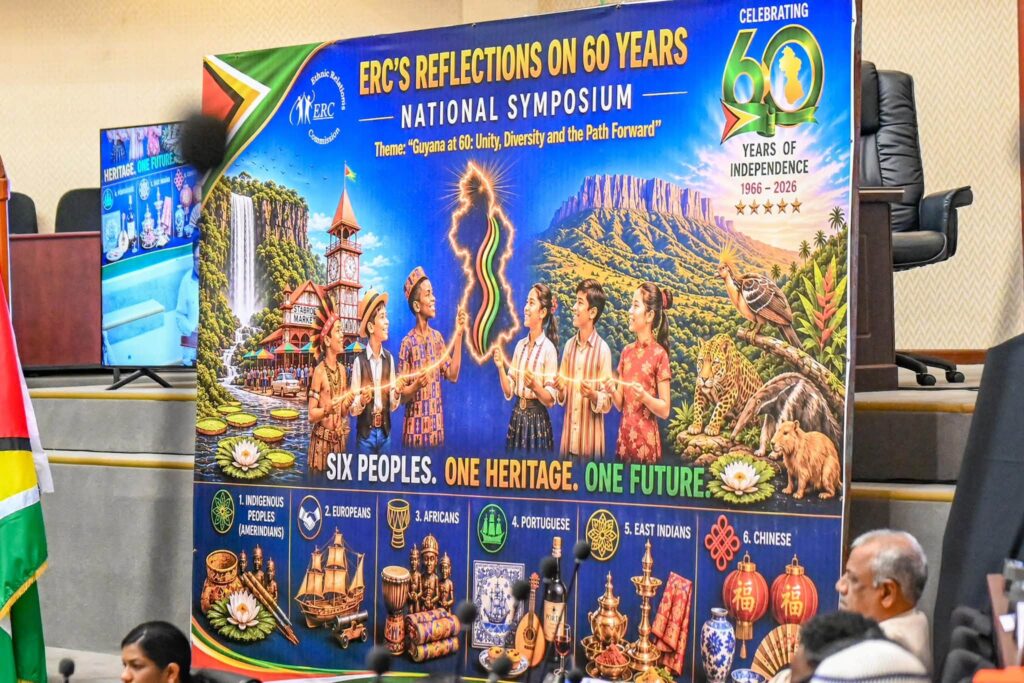
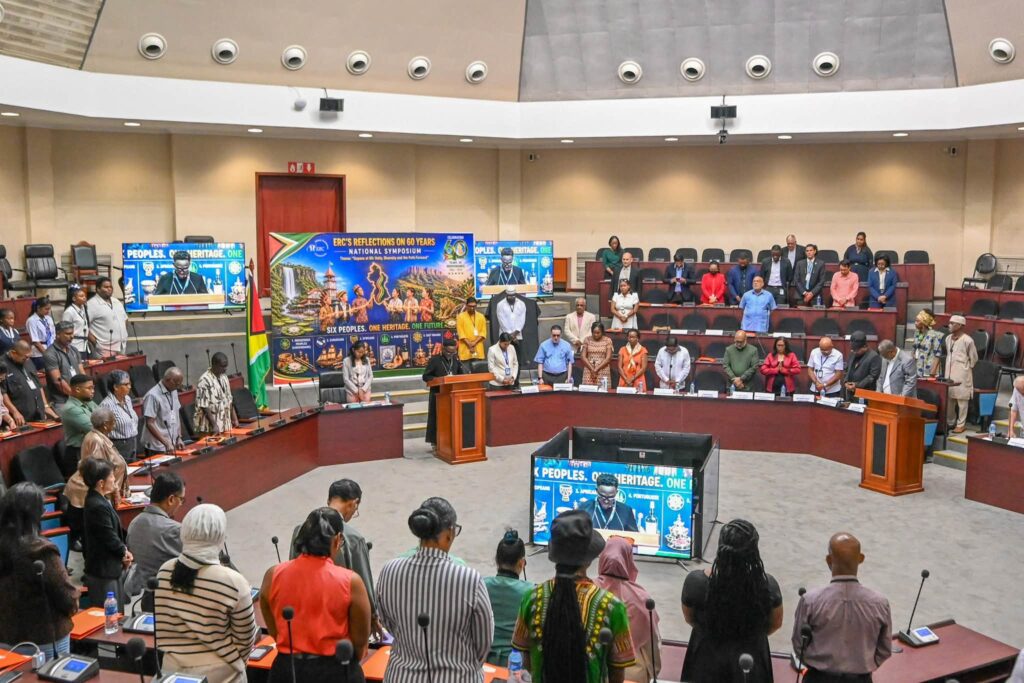
The Ethnic Relations Commission (ERC) hosted a National Symposium today on Unity, Diversity and the Path Forward in observance of the Guyana’s 60th Independence Anniversary, which was celebrated back in May.
Opposition Chief Whip, Member of Parliament for the WIN party, Tabitha Sarabo-Halley, told the forum that 60 years since Guyana gained its independence, the country continues to wrestle with questions of race, identity, inclusion and belonging.
“The foundations of modern Guyana were shaped by colonial policies that frequently divided communities along racial and ethnic lines. The legacy of slavery, the legacy of indentureship and the colonial practice of divide and rule created wounds and insecurities that did not disappear with independence. The perceptions and realities of unequal treatment, the perceptions and realities of discrimination, the perceptions and realities of marginalization, of domination, of exclusion and victim hood have left lasting scars on our society. They have contributed to distrust among communities, and have often influenced how we view politics, how we view governments, how we view power and how we view each other. Yes, despite these challenges, progress has been made. Today, Guyana is more interconnected than any previous point in our history,” MP Sarabo-Halley said.
The Opposition Chief Whip said Guyana is more interconnected than at any previous point in its history as she reminded that schools, workplaces, religious institutions and communities provide opportunities for interaction across ethnic lines. More Guyanese, she added, are willing to participate in cultural celebrations outside of their own traditions, signs of progress.
But MP Sarabo-Halley said progress is not the same as success.
“The reality is that 60 years after independence, race continues to influence how many Guyanese interpret politics, economic opportunities, public policies and national development. One of the most significant challenges facing race relations today is that many communities continue to feel excluded from the benefits of national development. As an African Guyanese I would be dishonest if I did not acknowledge that there is a deep and growing concern within many African Guyanese communities that the unprecedented wealth generated by our oil and gas resources has not translated into meaningful economic advancement for ordinary people,” MP Sarabo-Halley said.
According to her, many Guyanese feel that they are not experiencing tangible benefits from the country’s prosperity, and that the opportunities for long-term economic participation are not reaching their communities in a meaningful way.
She said there is also a concern that rather than addressing “structural concerns,” through sustainable investment, entrepreneurship, skills development and wealth creation, the response is often limited to short term solutions.
MP Sarabo-Halley said there are also many Indo-Guyanese who do not see themselves reflected in the propensity that is often highlighted in national discussions, and for far too long, the Indigenous peoples of Guyana continue to feel forgotten in the national conversation.
MP Sarabo-Halley said where these perceptions are “entirely accurate, partially accurate or inaccurate” they exist, and the Ethnic Relations Commission (ERC) must do more than hosts conference.
She said the Constitution mandates the Ethnic Relations Commission to identify and analyze factors inhibiting harmonious relations between ethnic groups, study barriers to participation in social, economic, commercial, financial, cultural and political life, conduct research into ethnic affairs, monitor ethnic relations and make recommendations to the National Assembly.
Senior Minister for Finance, Dr Ashni Singh, while also acknowledging that while progress has been made, said there is more work to be done. He also warned against the sowing of seeds of division.
“We need to be frank about separating rhetoric and sound bytes from reality. We have a duty to work to ensure that our diversity continues as it has been in the past, that our diversity continues to be the source of strength that it has been over the generations that preceded us, and that we continue to build on this instead of becoming a source of division and weakness,” Minister Singh said.
He said the Government is of the firm belief that Guyana’s diversity is a source of tremendous strength for the country.
Minister Singh said it was against that background that President Ali has adopted the “One Guyana” theme, as he fosters a spirit of oneness in the country, and builds on it in the development of the country.
He said Guyanese continue to participate in, contribute to and benefit from the economic transformation that is currently unfolding in the country.
“In fact, in the first term of President Ali’s presidency, we reduced by a half, the unemployment rate from 12.8% in 2020 to 6.8% in 2024 – creating more than 104,000 new jobs. And those jobs went to Guyanese of every single background, and in every single region of our country. We reduced youth unemployment from 30.2% in 2020 to 12.1% in 2024, and here again the young people who entered the labour market and found work, came from every part of Guyana and comprise every imaginable background,” the Finance Minister said.
Minister Singh, in defence of the work done by the Ali Administration in bridging the gap, spoke of the social programmes that have been created to meet the needs of Guyanese, including training and human resource development, job creation, and the issuance of cash grants.
He said the Government is committed to creating opportunities for all Guyanese for their growth and development.
Chairman of the ERC, Shaikh Moeenul Hack said meaningful progress has been made, but the journey continues.
“To navigate this new era, our socio-political landscape requires three things – continuous dialogue, data driven insight, and commitment to a common goal. And in an age when a single social media post, can either build or burn a bridge, the simple but demanding choice to extend to others is the same dignity we claim for ourselves, is of paramount importance,” he said.
The forum was intended to have Guyanese leaders reflect on ethnic relations in the country, engage in structured dialogue, collect empirical data, and produce an actionable findings based report.
Related posts:
 Labour Minister tells UN Forum that Guyana prioritizing development of Afro-Guyanese and all other people
 Opposition wants National Plan to address Ethnic Discrimination in Guyana
 New ERC being urged to do more to foster better race relations in Guyana
 National Conversation on Ethnic Relations in Guyana opens today

You must be logged in to post a comment Login