









The International Court of Justice early this morning began hearing oral arguments in the case filed by Guyana against Venezuela, challenging Venezuela’s claims over Guyana’s Essequibo region.
Guyana’s main legal argument before the International Court of Justice (ICJ) is that the land boundary between Guyana and Venezuela was finally and definitively settled by the 1899 Arbitral Award.
Minister of Foreign Affairs and International Co-operation, Hugh Todd, argued on behalf of Guyana.
Mr. Todd told the Court that Guyana maintains that the full, perfect and final settlement of the boundary occurred in 1899 when a tribunal—comprised of five judges from the UK, the US, and Russia—unanimously determined the border.
“For six decades, Venezuela fully respected that award and that agreement. Throughout that period, they never protested or challenged the award or agreement, in fact, established and uncontested. Venezuela consistently respected the award and the agreement in practice and by the boundaries established by the award and the agreement was consistently reflected in Venezuela’s official acts, maps, legislation and international agreements, until at least 1962,” Todd says as he opens Guyana’s case before the World Court.
Mr. Todd also pointed to the 1905 agreement where both Venezuela and the UK—on behalf of British Guiana at the time, formally accepted and demarcated the border exactly as determined by the 1899 Award and noted that for 60 years, Venezuela respected this boundary without protest.
“Mr. President, and members of the Court, it is Guyana’s submission that the 1899 award, without question, is legally valid and binding on the parties and that the 1905 boundary agreement is legally valid and binding on the parties. It is Guyana’s submission that none of the arguments Venezuela has raised prior and during these proceedings against the award of the agreement have any merit whatsoever and that Venezuela’s challenges to the award and the agreement are, in any event, a century too late to be raised as a matter of international law,” Mr. Todd stated.
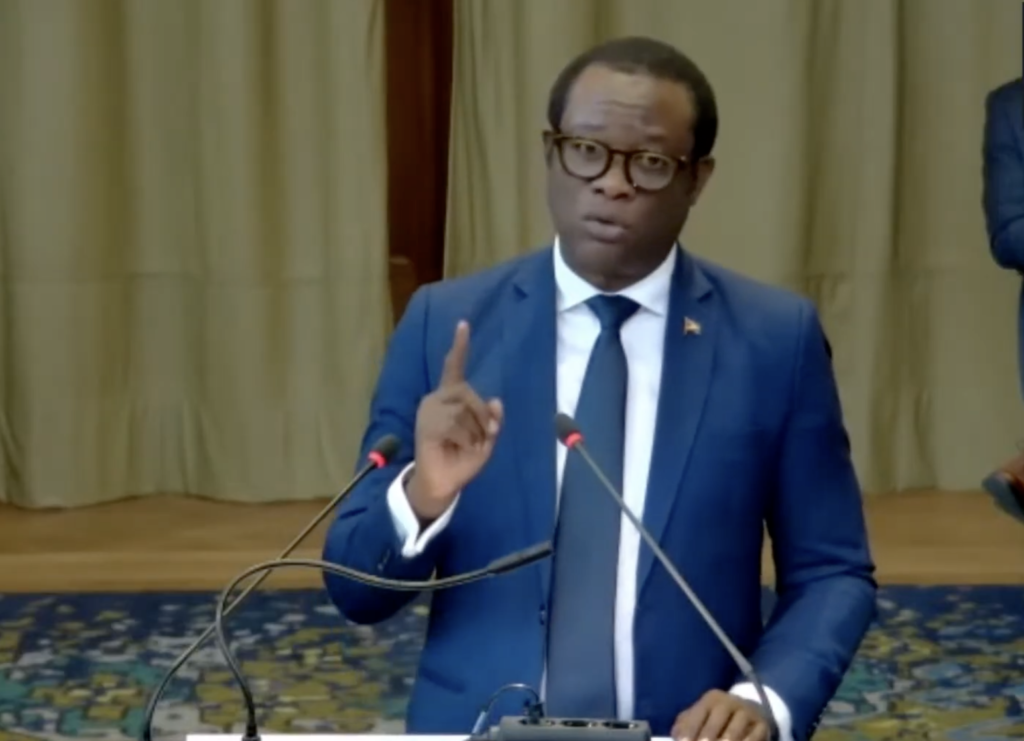
Mr. Todd noted that the award and boundary demarcated have been the lawful border of the two countries and, therefore, Venezuela is obligated in international law to accept and respect that border and to refrain from any activity in Guyana’s territory.
The Foreign Minister described the oral hearings as a historic moment and a moment of truth for both Guyana and Venezuela.
He recalled that it has been more than eight years since Guyana filed its application commencing the proceedings and has now arrived at a point where the court will determine the case on its merits.
He expressed confidence that the Court would rule fairly and said Guyana would abide by its ruling.
“We have arrived at this historic moment, despite Venezuela’s persistent efforts to stop us from getting here. First, in objecting to the court’s jurisdiction based on a strained and untenable reading of the 1966 Geneva agreement, which the court soundly rejected in its judgment of 18 December 2020, then it objected to the admissibility of Guyana’s claims. The court again resolutely rejected this effort in its judgment of 6th April 2023. Unable to derail the case, Venezuela decided to take matters into its own hands. In late 2023, it purported to stage a so-called national referendum seeking popular support in rejecting the jurisdiction of the court and disassociating itself in advance of any judgment the court might issue on the merits of the case,” Todd noted.
Meanwhile, the first Counsel to take the podium on behalf of Guyana was Professor Pierre D’Argent of Belgium. He dealt with Venezuela’s objection to the Court’s jurisdiction and its misreading and misrepresentation of the Geneva agreement.
According to Professor D’Argent, from its arguments, Venezuela is not seeking victory before the Court but has instead sought to delay and frustrate the process and, in doing so, has set a trap for itself.
“Venezuela’s arguments against the Geneva agreement are intended to postpone this moment of truth. After 60 years, however, this moment has arrived and nothing which the court has already said with regard to its jurisdiction and its exercise can be called into question by these arguments,” Professor D’ Argent argued.
Guyana is seeking to obtain a final and binding judgment from the Court that the 1899 Arbitral Award, which established the location of the land boundary between then-British Guiana and Venezuela, remains valid and binding, and that Guyana’s Essequibo region belongs to Guyana, and not Venezuela.
Related posts:
 ICJ to hear oral arguments in Guyana’s border case against Venezuela in May
 1899 Arbitral Award establishing Guyana/Venezuela land boundary must be respected -US Asst. Secretary of State
 Guyana reiterates call for Venezuela to respect 1899 Arbitral Award on anniversary of the ruling
 ICJ to hear oral arguments about its jurisdiction in Guyana/Venezuela border row case

You must be logged in to post a comment Login