









Leader of the Peoples National Congress Reform (PNCR), while steering clear of the recent allegations that have rocked the Caribbean Court of Justice (CCJ), believes there is a clear need for the regional institution to be reformed, on the grounds that it may be politically compromised.
Over the weekend, the President of the CCJ, Justice Winston Anderson was accused of panel fixing, judicial interference, and operating in a dictatorial manner in leaked emails between Judges of the Court.
In an interview, Mr. Norton said his position on the CCJ is not based on the recent allegations, but rather on his his lived experience, in which Justice Anderson reportedly inserted himself in Guyana’s political arena to achieve a desired outcome on the top judicial appointments in Guyana.
Norton explained that in October 2025, the President of the Caribbean Court of Justice repeatedly engaged him on the appointment of a substantive Chancellor and Chief Justice.
He stated that during those engagements, Justice Anderson indicated that the then Acting Chancellor, Justice Yonette Cummings, was prepared to proceed on pre-retirement leave to make way for the substantive appointments of Justice Roxane George and Justice Navindra Singh as the substantive Chancellor and Chief Justice respectively.
Under the Constitution, the Chancellor and Chief Justice are appointed by the President with the agreement of the Leader of the Opposition. Mr. Norton, who was the outgoing Opposition Leader at the time, said Justice Anderson’s insistence that Justice Cummings was pleased with her retirement package did not sit well with him, and he became concerned.
“He said he was part of the negotiation, in some regard or he facilitated it. I found that strange, I found it odd, that he should be involved in that,” Norton said.
Norton said he was later contacted by President Irfaan Ali, who he said indicated that he was prepared to have the two judicial officers appointed, but needed his agreement. Mr. Norton had previously written the President giving his no objection to the confirmation of Justice Cummings and Justice George to the top two judicial posts, but he was ignored.
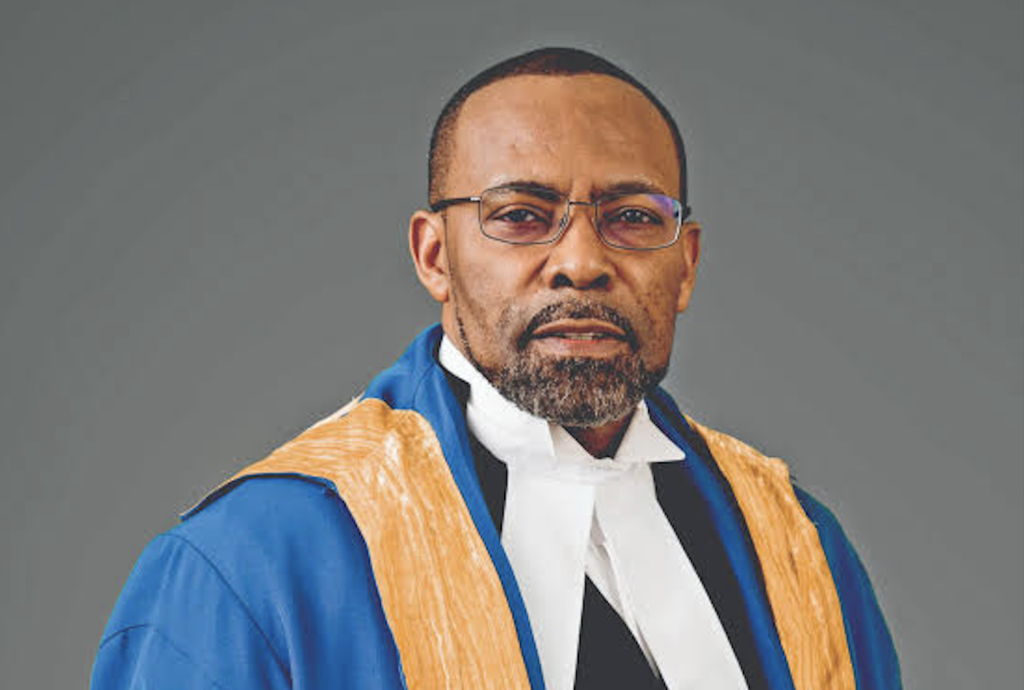
Norton said the CCJ President, Justice Anderson repeatedly contacted him on the matter of the substantive appointments with the hope of locking in his agreement.
He said he was forced to discontinue the engagement with the CCJ President after realizing it was not in the best interest of Guyana.
“I stopped taking his calls because I had made it very clear to Justice Anderson in a meeting in October, in the presence of other opposition parties that I was not prepared to let them push out Justice Cummings. I also said the same thing to the president before that I am not prepared to agree for Justice Cummings to be pushed out, and that has been my principle position all along,” Norton said.
Days after Justice Anderson’s visit to Guyana in October 2025, President Ali announced that Justice Cummings was heading off on early retirement. The President said Justice Cummings, who had returned from two months of vacation leave, requested pre-retirement leave. She had been acting since 2017.
The PNCR leader said it was then that he lost all confidence in the Caribbean Court of Justice as it became clearer to him that Justice Anderson had been acting as a negotiator on behalf of the President.
He said while the PNC has been supportive of the CCJ, the Court must be free from political bias.
“In principle, we support a Caribbean Court of Justice but it has to be impartial, it has to live by judicial culture of independence and separation of powers. And to me, Justice Anderson was involved in some amount of overreach and that raises questions about the independence of the Caribbean Court of Justice,” the PNCR leader said.
Underscoring his support for regional integration, the PNCR leader said there is need for the CCJ to be reformed, and insulated from Governments in the Caribbean so that it can effectively serve the citizens of the region.

“Right now in Guyana, if you go to the Courts, you are 99% sure that once the issue has politics in it, the Courts will rule in favor of the Government, and to the extent that there is the Caribbean Court of Justice, it could be an impartial arbiter if it operates as such. The problem is, some people seems to be compromising the integrity of the Caribbean Court of Justice by getting it involved in the politics of particular countries, and that I have no doubt is militating negatively against the Caribbean Court of Justice,” Norton said.
Amid growing concerns over its integrity, the CCJ said it remains committed to judicial independence, integrity and public confidence in the administration of justice.
Related posts:
 CCJ President raised confirmation of Chancellor and Chief Justice during opposition engagement -Norton confirms
 Norton ignores President’s request for agreement on appointment of substantive Chancellor and Chief Justice
 Acting Chancellor Yonette Cummings returns to work
 Norton maintains support for confirmation of Justices Cummings and George to top judicial posts

You must be logged in to post a comment Login