









Principal Magistrate Judy Latchman today rejected an application by embattled father and son businessmen, Nazar and Azruddin Mohamed to have the US Extradition Case referred to the High Court, on the grounds that the constitutional issues raised by the businessmen have already been adjudicated upon by the Superior Court.
In her ruling today in the Georgetown Magistrates’ Court, the Principal Magistrate said there was no need to resurrect what has already been put to rest. Her ruling, paves the way for the extradition hearing to continue in the Georgetown Magistrates’ Court.
The father and son are facing an 11-count indictment in Florida related to allegations of mail and wire fraud, and money laundering and tax evasion claims related to gold export.
The Attorneys for the Mohameds had argued that the Fugitive Offenders (Amendment) Act of 2009 infringes on the defendant’s Constitutional rights, particularly with regards to re-extradition by a third state, as they made a case for the Constitutional issues to be addressed in the High Court.
But Magistrate Latchman said the issues raised by the Defence in relation to re-extradition have been adjudicated upon, as she alluded to the cases of Stephen King and Sobers v Director of Prisons and Marvin Williams known as Troy Thomas.
Though the Barry Dataram Case was repeatedly mentioned throughout the arguments, Magistrate Latchman said she will not rely on that authority because it took place prior to the amendments. Rather, she directed her attention to the Troy Thomas Case, which took into account the Fugitive Offenders Amendment Act of 2009. In that case, Justice Jo-Ann Barlow had ruled on the issue of extradition to a third state, and the roles and responsibilities of the Minister.
Upholding the arguments put forward by Special Prosecutor, Terrence Williams, Magistrate Latchman said the Court is bound to act on “the principle of stare decisis,” and therefore cannot act outside of the decisions made in the Marvin Williams case.
“This Court is not about to resurrect what has been put to rest, having judiciously examined all the issues referenced by the defense and a request for a referral to be triggered. This Court sees no basis to activate,” Magistrate Latchman ruled as she rejected the application for judicial review at the level of the High Court.
The Prosecution, in support of its case, had produced a diplomatic note assuring that the requesting state – the US – will not keep the Mohameds in custody or have them stand trial for any other crime or offence other than those for which the extradition took place until they have the opportunity to return to the territory for which they were surrendered. But the Magistrate was keen to point out that a diplomatic note is not binding or concrete.
“It is the Court’s respectful view that a diplomatic note is not set in stone but a treaty arrangement is binding on the parties, and must be performed by them in good faith in accordance with the Vienna Convention on the Law of Treaties,” the Magistrate said.
Outside the courtroom, Special Prosecutor Williams welcomed the ruling, noting that he is pleased that the case will continue in the Magistrates’ Court.
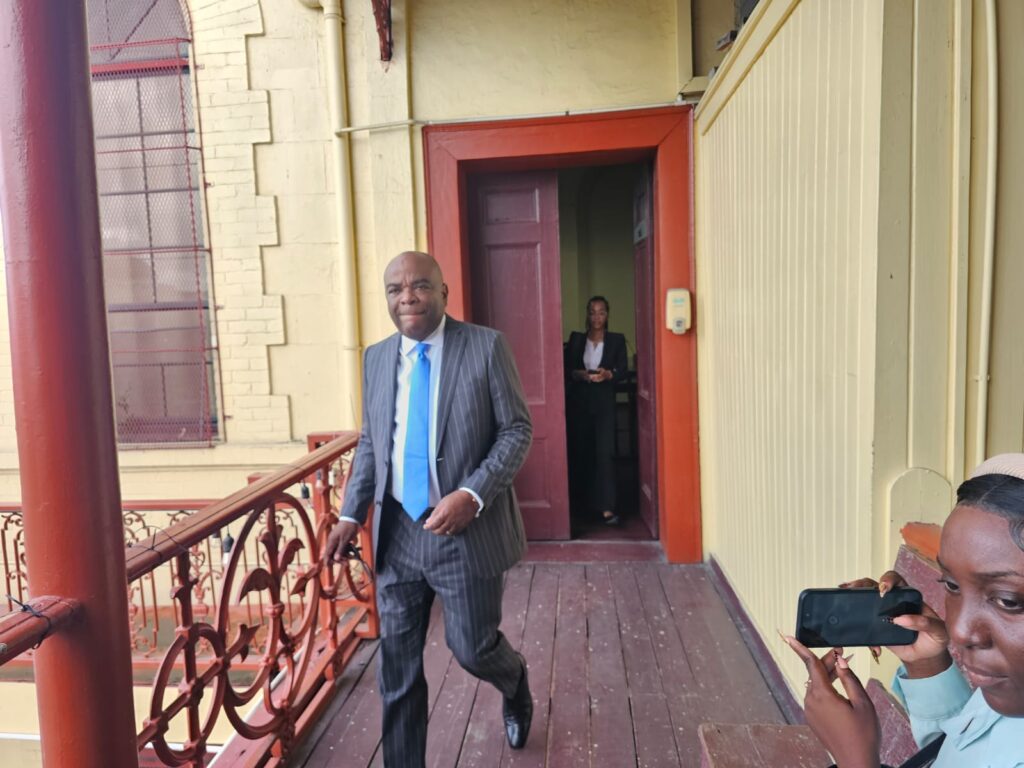
“The formal proceedings of putting in the request [will be done] so that the Magistrate could examine the evidence in the request and rule on the sufficiency of the evidence in the request,” Williams said.
Senior Counsel Roysdale Forde, who represents the Mohameds, disagreed with the ruling, signaling that the Mohameds will now be seeking leave to move to the High Court to have the issues heard there.
“We believe that the Court improperly exercised its discretion this morning when it found that the application should not be deferred to the High Court. We believe that we have established clearly the basis for it, the inconsistencies in the decisions, and the clear unconstitutionality in relation to these provisions which were amended in 2009. We are entitled to approach the High Court itself as part of the procedural process,” Forde said.
He said the Mohameds would be approaching the High Court shortly in keeping with their Constitutional right to do so.
Until then, the matter in the Magistrates’ Court is set to be called again on January 6, 2026 when the substantive request for the extradition of the father and son would be dealt with by the Court.
Related posts:
 Prosecution completes disclosures in Mohameds extradition case; Constitutional issues to be heard and addressed
 Prosecution and Defence tussle over disclosures in Mohameds extradition hearing; Case resumes on Friday
 Attorneys for US Government present key documents to Court in Mohameds extradition case
 High Court hearing over Magistrates’ Court ability to hear extradition case begins

You must be logged in to post a comment Login