









The Ministry of Local Government hosted a consultation today with the country’s 90 Local Government Organs on the proposed Integrated Solid Waste Management Bill and Regulations.
The legislation, which has been in the pipeline for an extensive period, is intended to modernize and streamline the country’s waste management laws, and ultimately, the management of solid waste in the country, including industrial and hazardous medical waste.
Embedded in the proposed legislation are provisions for waste segregation and storage, recycling and circular-economy measures, in addition to updated penalties and fines for breaches.
Addressing local officials at the Arthur Chung Conference Centre, Minister of Local Government and Regional Development, Priya Manickchand said the Integrated Solid Waste Management Bill, and its accompanying regulations are being proposed at a time when the country is undergoing massive transformation, with major developments in almost all sectors.
Citing the developments in the Housing Sector, Minister Manickchand said with increase homes, come increase waste, and it is important to manage both the domestic and industrial waste being produced in all sectors.
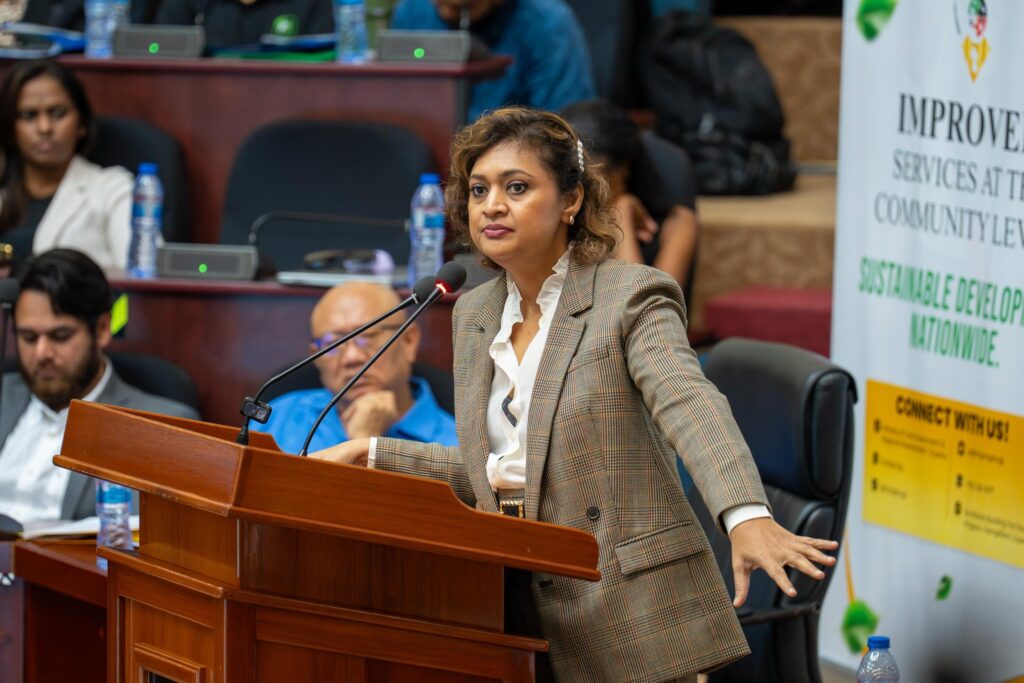
“In the last five years, the PPP/C Government was able to give more than 50,000 house lots for homes to people in Guyana, young people, middle age people, and older people. What that means is that you will have 50,000, perhaps not in the same five years, but 50,000 homes going up. What that means is that you will have 50,000 people engaging in producing builders’ waste or other waste because you will now have 50,000 worksites happening, where people are eating on the worksites, where they have wrappers, the corn curls bags or the plastic bags to throw away or dispose of,” she explained.
In crafting the legislation, she said the Government adopted a holistic approach of analyzing each sector to determine the type and quantity of waste produced but also taking into account the need to address issue of poor waste disposal.
Minister Manickchand said already, the Government is building out modern landfill sites in all 10 Administrative Regions.
“Have you ever been to a country that has been about how we can change waste into energy, or waste into fertilizer or to add value in any way to waste, you are going to see those robust not only conversations but actions being taken. So, those new landfill sites are not dump sites, they are going to be landfill sites with all the attendant characteristics that modern landfill sites across the world have,” Minister Manickchand said.
Permanent Secretary of the Ministry of Local Government, Miguel Choo-Kang said the legislative and regulatory frameworks are critical to addressing the waste management in the country.
“The legislative review process is both timely and necessary. It seeks to modernize existing arrangements, clarify institutional roles and responsibilities, strengthen enforcement mechanisms, and create a framework that enables investments in innovation and improved service delivery across all 10 Administrative Regions,” Choo-Kang said.
Local Government Ministry Consultant, Rommel St Hill said the current laws governing solid waste management in the country are “fragment,” and in some cases outdated.
He said the proposed legislation is in keeping with international best practices, and will address gaps in existing legislation, particularly those that do not address new and emerging sectors in the country.
Related posts:
 Local Government Ministry to address odor and smoke from Haag Bosch landfill site
 $1.6 Billion to be spent on maintenance of landfill sites and solid waste campaign
 Local Government Ministry still to release 2024 subvention for Linden Municipality; City Council has only received 50%
 Solid Waste Department wants Council to license private waste removers

You must be logged in to post a comment Login